


Steven Sahiounie, journalist and political commentator
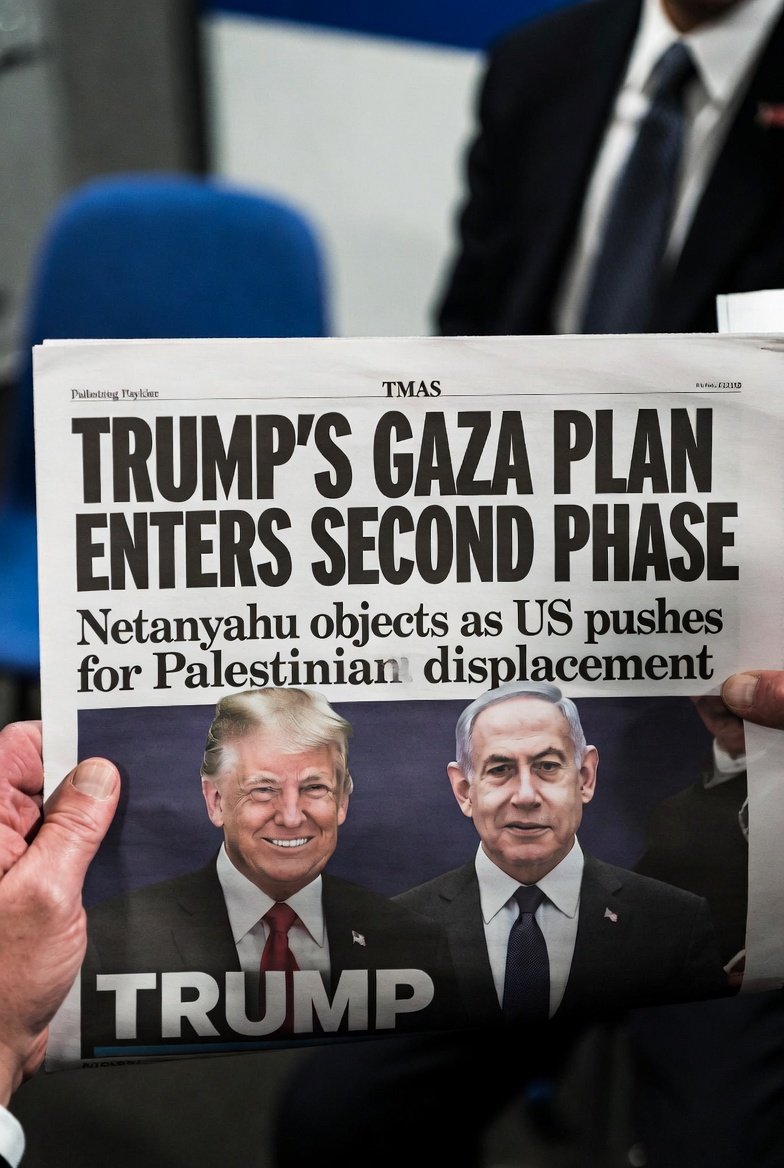
US Special Envoy Steve Witkoff has officially announced the launch of the second phase of US President Donald Trump’s plan to end the war in Gaza, a move that marks a critical turning point in efforts to stabilize the besieged Palestinian enclave after more than two years of devastating conflict.
According to Witkoff, the second phase centers on three core pillars: the formation of a Palestinian technocratic government to administer Gaza, a comprehensive reconstruction process, and the complete demilitarization of the territory, including the disarmament of Hamas and all other Palestinian factions.
“The United States expects full compliance from Hamas with its commitments,” Witkoff warned, stressing that these obligations include the return of the body of the last Israeli hostage killed during the war. “Failure to do so will result in serious consequences,” he added.
From Ceasefire to Reconstruction
Under the first phase of the agreement, Hamas and Israel reached a ceasefire in October 2025, which included a partial Israeli withdrawal, an exchange of hostages and detainees, and a significant increase in the flow of humanitarian aid into Gaza. While the truce has remained largely intact, it has been repeatedly strained by mutual accusations of violations.
The announcement of the second phase was welcomed by Egypt, Qatar, and Turkey, which issued statements supporting the formation of what they described as a “Palestinian technocratic committee to administer the Gaza Strip.” These countries emphasized that such a body could contribute to stabilizing the territory and improving the dire humanitarian situation.
Qatar’s Foreign Ministry spokesperson, Majed Al-Ansari, expressed hope that the announcement would help solidify the ceasefire and address the worsening humanitarian conditions in Gaza. He stressed the need for all parties to fully implement the agreement, including ensuring unrestricted entry of humanitarian aid and the immediate start of reconstruction efforts to alleviate civilian suffering and restore dignified living conditions.
The US-Led “Peace Council”
Diplomats revealed that leaders of several countries received invitations on Saturday to join a newly established US-led “Peace Council,” initially tasked with overseeing the end of the Gaza conflict before expanding its mandate to address other global disputes.
According to an announcement by the Kremlin, Russian President Vladimir Putin has received an invitation to join the US-led “Peace Council” for Gaza. The Kremlin spokesman, Dmitry Peskov, has said the proposal is under consideration.
The White House announced on Friday the first group of council members, which includes US Secretary of State Marco Rubio, Special Envoy Steve Witkoff, former British Prime Minister Tony Blair, and Jared Kushner, Trump’s son-in-law. According to the White House, President Trump himself will chair the council.
Speaking to Reuters in a recent interview, Trump said: “In my view, it will start with Gaza, and then we will deal with conflicts as they arise.”
The initiative has drawn criticism from human rights experts, many of whom argue that US oversight of a non-American territory evokes colonial-era practices. Tony Blair’s involvement has also been controversial, given his role in the Iraq War and Britain’s colonial legacy in the Middle East. Notably, no Palestinian representatives were included in the initial list of Peace Council members.
Executive Council and Israeli Objections
In addition to the Peace Council, the White House announced the formation of an 11-member “Gaza Executive Council” to support governance and service delivery. Members include Turkish Foreign Minister Hakan Fidan, UN Special Coordinator for the Middle East Peace Process Sigrid Kaag, UAE Minister of State for International Cooperation Reem Al
Hashimy, Israeli-Cypriot billionaire Yakir Gabay, and other international figures.
However, Israeli Prime Minister Benjamin Netanyahu’s office stated that the council was formed without coordination with Israel and contradicts Israeli policy, particularly objecting to Turkey’s participation. The Israeli government has not yet provided further comment.
Rising Death Toll and Legal Accusations
Since the ceasefire began In October, reports indicate that more than 450 Palestinians have been killed, including over 100 children, alongside the deaths of three Israeli soldiers, amid mutual accusations of ceasefire violations.
Israel’s military campaign in Gaza, launched in late 2023, has killed tens of thousands of Palestinians, triggered widespread displacement, and caused severe hunger across the enclave. Numerous human rights organizations, independent researchers, and a UN commission of inquiry have stated that the campaign amounts to genocide. Israel rejects these accusations, saying it is acting in self-defense following the Hamas-led attack in October 2023 that killed 1,200 people and resulted in the capture of approximately 250 hostages.
Technocratic Leadership for Gaza
On Friday, the White House announced that Ali Shaath, former Palestinian deputy foreign minister, will head the newly formed Palestinian National Committee to administer Gaza. The White House described Shaath as a “widely respected technocratic leader” who will oversee the rehabilitation of public services, the rebuilding of civil institutions, and the stabilization of daily life in Gaza, while laying the groundwork for sustainable long-term governance.
A supporting executive body will include Witkoff, Kushner, Blair, Reem Al-Hashimy, Qatari diplomat Ali Al-Dhuwadi, Egyptian intelligence chief Hassan Rashad, former UN envoy Nikolay Mladenov, and others. Trump will chair the executive council overseeing the Peace Council, which also includes World Bank President Ajay Banga and US political strategist Robert Gabriel.
Mladenov has been appointed as High Representative for Gaza, while General Jasper Jeffers will lead an international stabilization force.
Saudi and Regional Support
Saudi Arabia welcomed the launch of the second phase of the plan and the formation of the Palestinian National Committee as a temporary transitional authority. Riyadh praised Trump’s commitment to Israeli withdrawal and opposition to the annexation of any part of the West Bank, and commended the mediation efforts of Qatar, Egypt, and Turkey.
Saudi officials emphasized the importance of preserving the institutional and geographic unity between Gaza and the West Bank and rejected any attempts to divide Palestinian territory.
Who Is Ali Shaath?
Ali Shaath, born in Khan Younis in 1958, is a civil engineer with a PhD from Queen’s University Belfast. He previously served as Deputy Minister of Planning in the Palestinian Authority and oversaw the development of industrial zones in both Gaza and the West Bank.
Shaath has unveiled an ambitious reconstruction plan that includes relocating war debris to the Mediterranean Sea and rebuilding Gaza’s destroyed infrastructure within three years. However, UN estimates suggest that rebuilding Gaza’s housing alone could take until at least 2040.
Shaath acknowledged that his immediate priorities are emergency relief and temporary housing for displaced Palestinians, followed by restoring critical infrastructure and rebuilding homes. “Gaza will return better than it was within seven years,” he said in a radio interview.
A Fragile Path Forward
Despite Hamas signaling readiness to hand over administrative control to the technocratic committee, the movement has not agreed to disarm, a condition central to the US plan. Israel, meanwhile, continues to restrict the entry of heavy equipment into Gaza, citing security concerns.
Under Trump’s plan, Israeli forces have withdrawn from nearly half of Gaza, while maintaining control over areas where entire neighborhoods have been flattened. Trump has previously suggested transforming Gaza into what he called the “Riviera of the Middle East,” a remark that sparked widespread controversy.
As negotiations move toward the second phase, mediators in Cairo continue efforts to finalize the technocratic committee and secure broader Palestinian consensus. Whether the plan can overcome deep political divisions, security challenges, and humanitarian devastation remains uncertain.
What is clear, however, is that the second phase of the Gaza agreement represents the most ambitious — and contentious — attempt yet to reshape Gaza’s future after one of the most destructive wars in Its history.
Steven Sahiounie is a two-time award-winning journalist.

