


Steven Sahiounie, journalist and political commentator
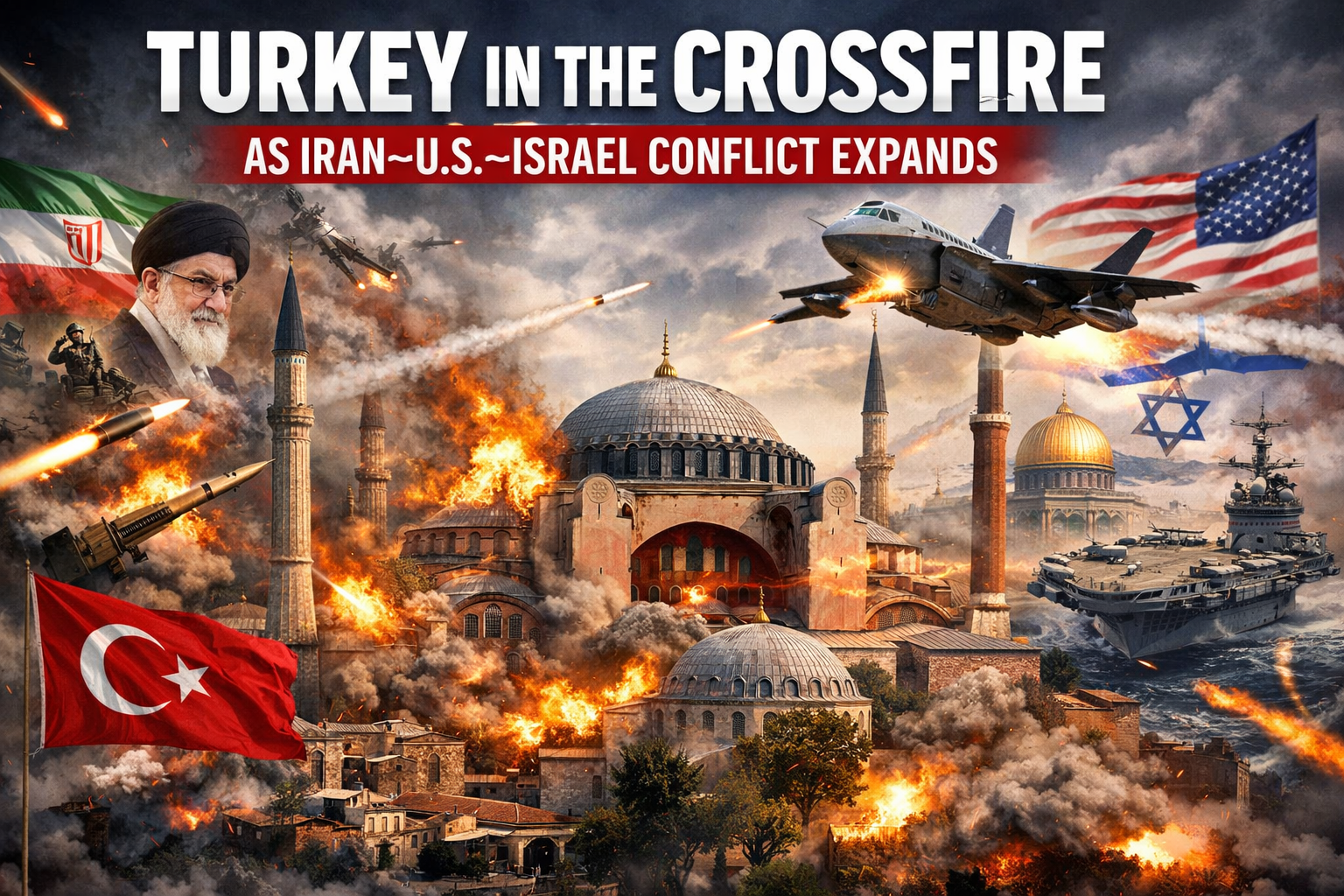
Turkey is increasingly finding itself involved in a widening regional crisis as tensions linked to the ongoing conflict between Iran, the United States, and Israel continue to escalate. On Friday, March 13, the Turkish Ministry of Defense announced that NATO air defenses stationed in the Eastern Mediterranean intercepted a ballistic missile launched from Iran toward Turkish territory. The ministry demanded an explanation from Tehran, marking the third such missile incident since early March.
However, the Iranian Embassy in Ankara stated on X, that no projectile had been launched from Iran towards Turkey.
NATO later confirmed that its air defense systems had intercepted the third ballistic missile fired from Iran toward Turkey.
Third Missile Since March 4
The latest interception follows two earlier incidents this month. On March 4, NATO air defenses intercepted the first Iranian ballistic missile heading toward Turkey while it was still en route to Turkish airspace. A second missile was shot down on March 9 after it had already entered Turkish airspace.
Iran had denied targeting Turkey in the March 4 attack.
These incidents represent a growing test for Ankara and the NATO alliance as a whole. Turkey, which possesses the second-largest military in NATO and shares a long border with Iran, has firmly rejected any further attacks. After each incident, Ankara lodged formal protests with Tehran but has so far refrained from signaling any intention to formally request NATO’s collective defense protection.
Turkey No Longer a Passive Observer
The current regional environment has pushed Turkey beyond the role of a mere observer. Ankara now finds itself deeply embedded in a complex geopolitical crisis where the Iranian–American confrontation intersects with longstanding ethnic tensions and historical fears of territorial fragmentation.
At the center of Turkey’s strategic concerns lies the Kurdish issue. Millions of Kurds live within Turkish borders, while Kurdish populations in Iraq and Syria enjoy varying degrees of autonomous governance that have received international recognition and support.
The Iranian Kurds living in self-imposed exile in Iraqi Kurdistan have been receiving arms for the CIA recently in order to pose a threat to Iran and carry out cross-border terrorist strikes inside Iran.
The American sponsorship of Iranian Kurds on the Turkish border poses a direct national security threat to Turkey. The Kurds in Iraq, and Syria have a long history of US military support and have traded weapons amongst the groups regardless of international borders.
The Kurds believe that ‘Kurdistan’, though not internationally recognized, extends from Turkey, Syria, Iraq and Iran in a seamless geographical entity.
This concern explains Turkey’s continued insistence on maintaining the right to conduct military operations in northern Iraq and northern Syria. Ankara has consistently opposed any international arrangements that could expand Kurdish political rights or enhance their political status, regardless of the humanitarian or political arguments supporting such proposals.
A Delicate Balance Between NATO and Iran
Turkey’s strategic dilemma becomes even more complex when viewed in the context of its relationships with both sides of the broader regional conflict. As a NATO member, Ankara is expected to demonstrate a degree of solidarity with the Western alliance led by Washington. At the same time, antagonizing Iran carries significant risks.
The two countries share a long border and maintain substantial trade ties, along with tactical overlaps in several regional policy areas. As a result, Ankara has pursued a carefully calibrated pragmatic approach—seeking to manage tensions rather than fully align with either side.
However, the continuation and intensification of the war may gradually narrow Turkey’s room for maneuver and force it into sharper policy choices than It currently prefers.
Erdogan Calls for Diplomatic De-Escalation
On Thursday, Turkish President Recep Tayyip Erdoğan announced that Ankara is leading an intensive diplomatic effort to contain the cycle of violence centered on Iran, warning that it risks dragging the entire region into a comprehensive catastrophe.
Warning of Potential NATO Escalation
Senior Turkish military sources told Al Jazeera that Ankara’s current stance could shift if another Iranian attack strikes Turkish territory. According to these sources, an attack on Turkey would effectively constitute an attack on NATO.
They stressed that while Iran has reportedly launched missiles toward 11 countries in the region during the broader conflict, targeting Turkey would amount to declaring war on all 32 NATO member states—an action they described as “not a wise move under any circumstances.”
The sources added that Turkey remains open to cooperation in investigating the previous missile incidents but questioned the credibility and practicality of Tehran’s proposal to form a joint investigation committee under the current circumstances.
Several scenarios are being considered regarding the missile launches. These include the possibility of a deliberate Iranian attack, actions carried out by armed groups exploiting weakened central authority in Iran, or operations by Israeli agents. Experts have suggested missiles fired from Iraq may appear to have originated in Iran, in a so-called ‘false-flag’ operation.
Strengthening Air Defense
In response to the growing threat, Turkey is coordinating with NATO to deploy Patriot air defense systems in the province of Malatya in eastern Turkey. The move aims to reinforce the country’s airspace security and by extension the air defense shield of the NATO alliance.
Earlier this week, the Turkish Ministry of Defense announced that NATO air defense systems in the Eastern Mediterranean had neutralized ballistic debris launched from Iran that entered Turkish airspace. Fragments of the intercepted projectile fell in an uninhabited area in the southern province of Gaziantep, causing no casualties or damage.
Diplomatic Engagement Continues
Meanwhile, Turkish Foreign Minister Hakan Fidan revealed that Ankara is maintaining active communication with both the United States and Iran in an effort to end the war in the Middle East as soon as possible.
“We are speaking with the Iranian side and the American side,” Fidan said, adding that the war against Iran was launched “without prior provocation” and describing it as unjust and illegitimate, while also condemning Iranian missile attacks against Gulf countries.
Fidan also called for an immediate halt to Israeli bombardment of Lebanon, warning that the country risks collapse if the escalation continues. According to Fidan, the policies of Israeli Prime Minister Benjamin Netanyahu are at the center of many crises in the region.
Steven Sahiounie of MidEastDiscourse interviewed former Turkish diplomat, Aydin Sezer, to get further insight into the issues facing Turkey in the US-Israel war against Iran.
#1. Steven Sahiiounie (SS): A regional war has started between Israel and United States from one side, and Iran and its allies from other side. Where does turkey stand in everything happening today in the Middle East?
Aydin Sezer (AS): To be frank, Turkey’s stance is also controversial in domestic politics. Turkey is a NATO member and hosts the Kürecik radar and the Incirlik military base. Relations between Erdoğan and Trump are, quite literally, at an excellent level. Consequently, Turkey has not actually criticized the U.S. in strong terms or condemned the attack on Iran. Instead, some AKP representatives are making political statements that largely blame Israel. This is an effort to appear sympathetic to those in the Turkish public who support Iran. Even Erdoğan says that Netanyahu deceived and provoked Trump. Turkey is largely adopting a “wait and see” policy, but at its core, I would say it stands with the aggressive U.S.
#2. SS: Turkey’s government has good relationship with both sides, United States and Iran. In your opinion, will we see the Turkish government working on decreasing the tension of this war, and finding a solution?
AS: Since the start of the war, Turkey has been making statements in this direction. In fact, even before the war began, it tried to bring Iranian and U.S. officials together at the Istanbul platform. However, Iran preferred Oman over Istanbul. On paper, Turkey-Iran relations appear normal, even good. However, I personally believe that Turkey is subject to a trust issue, particularly from Iran’s perspective. After all, Turkish-U.S. relations during the Trump era—including Turkey’s participation in Trump’s peace committee—and perhaps the role Turkey might play in ensuring that Gaza is completely severed from Palestine and placed under a government that poses no threat to Israel certainly catches Iran’s attention. I also believe that the U.S. and Israel do not need a mediator for the war. For this reason, I do not think Turkey’s mediation rhetoric holds any significance.
Steven Sahiounie is a two-time award-winning journalist.

