


By: Steven Sahiounie, journalist and political commentator
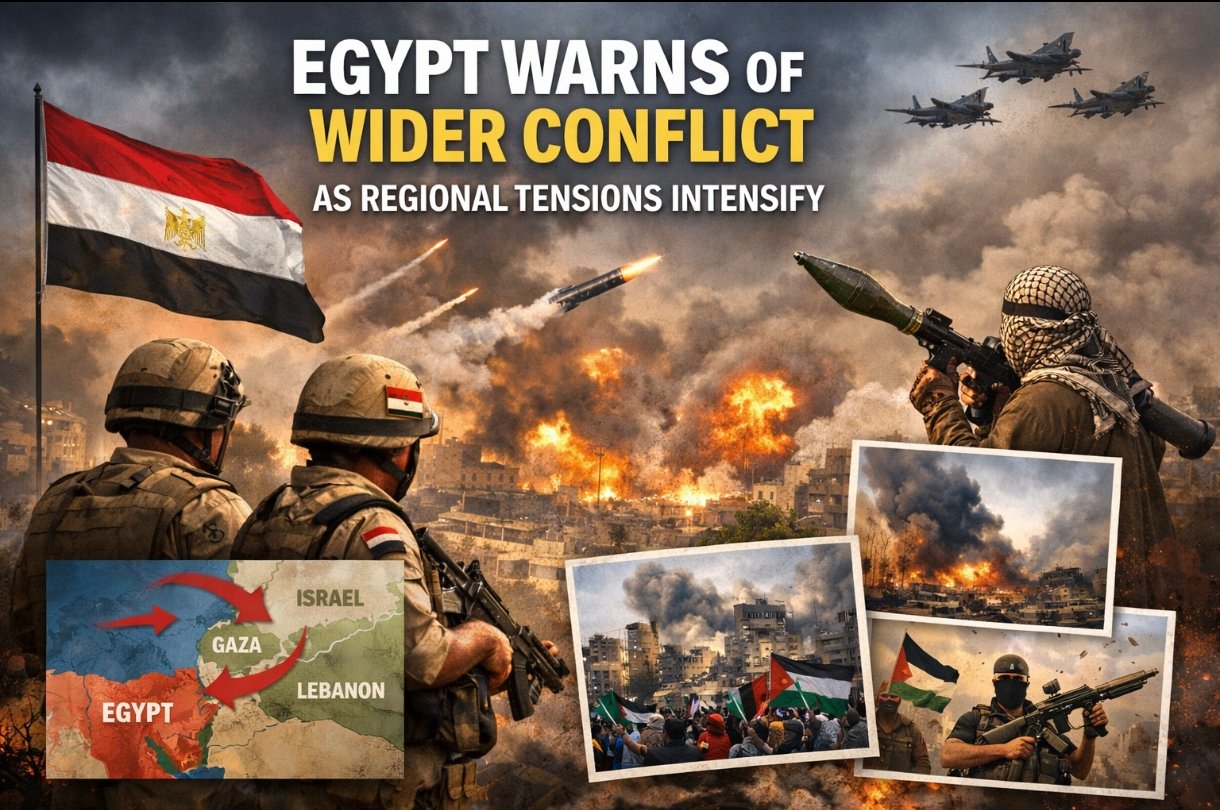
Egypt has issued a strong condemnation of Israel’s ground incursion into southern Lebanon, describing it as a “flagrant violation of Lebanese sovereignty” and a serious breach of international law and the United Nations Charter.
In an official statement, Egypt’s Ministry of Foreign Affairs expressed full solidarity with Lebanon, stressing its firm rejection of any infringement on its sovereignty or territorial integrity. Cairo called for the immediate withdrawal of Israeli forces and urged full implementation of United Nations Security Council Resolution 1701, emphasizing the importance of enabling Lebanese institutions, particularly the army, to maintain control over national territory.
Egypt also called for a comprehensive halt to Israeli military operations, including airstrikes on Beirut and other regions, and condemned reported strikes on UN peacekeeping forces (UNIFIL). According to Cairo, the escalation is worsening the humanitarian crisis, increasing civilian suffering, and forcing mass displacement.
At the same time, Egypt urged the international community and the UN Security Council to take decisive action to enforce de-escalation and prevent the situation from spiraling into a broader regional conflict.
Rising Regional Tensions and Egypt’s Diplomatic Engagement
These developments come amid heightened tensions involving Israel, Iran, and multiple regional actors, sparking debate over Egypt’s role in supporting Its Arab allies.
Criticism has emerged in regional media, including controversial remarks by Kuwaiti writer Fouad Al-Hashem, who questioned Egypt’s level of support for Gulf states facing Iranian attacks. However, Egypt has intensified its diplomatic outreach in response.
Foreign Minister Badr Abdelatty recently conducted a regional tour across Gulf countries, reaffirming that the security of Gulf states is integral to Egypt’s national security. In meetings with Gulf and Saudi officials, Egypt reiterated its rejection of Iranian attacks and emphasized the need to reduce escalation.
President Abdel Fattah el-Sisi has also reinforced this position through direct communications with regional leaders, expressing solidarity with Saudi Arabia while simultaneously maintaining dialogue with Iran and calling for restraint and good neighborly relations.
Strategic Restraint and Military Doctrine
Amid ongoing debate, Egyptian officials and analysts have highlighted that Egypt’s support for its allies does not necessarily require direct military intervention. Retired Major General Samir Farag noted that assistance can take various forms, including intelligence sharing, logistics, and military training, with decisions on troop deployment made carefully and in coordination with partner states.
This approach reflects Egypt’s broader military doctrine, which prioritizes defending national territory and avoiding unnecessary entanglement in external conflicts.
Egypt’s Role in De-escalation: Insights from Political Analysis
Journalist Steven Sahiounie Interviewed Egyptian Political analyst Talat Taha and he emphasized that Egypt continues to play a pivotal and balanced role in the region, leveraging its strong relations with both the United States and Iran.
According to Taha, Egypt is actively working toward a broader ceasefire in the Middle East, particularly between Washington and Tehran, while maintaining strong ties with Gulf and Arab states. He stressed that Cairo supports de-escalation efforts and seeks to avoid being drawn into a conflict that does not directly concern it.
He noted that while there is no immediate threat to Egypt, the country remains prepared. Egypt’s military, he explained, is firmly committed to a defensive doctrine focused on protecting its borders, airspace, and resources, rather than engaging in offensive operations.
Taha also warned that the region is entering a dangerous phase, with the potential for wider conflict involving major powers. However, he questioned whether any country—including the United States—could sustain a prolonged war under current conditions.
The Palestinian Issue and Shifting Regional Priorities
Despite shifting regional dynamics, Egypt continues to position itself as a key supporter of the Palestinian cause. Taha stressed that Cairo has long been engaged in ceasefire efforts and peace initiatives, including recent diplomatic activity linked to Gaza.
However, he acknowledged that regional attention is increasingly shifting toward Iran and broader geopolitical tensions, potentially sidelining the Palestinian issue. Still, he emphasized that Egypt, along with countries like Jordan and Saudi Arabia, remains committed to keeping the Palestine at the forefront.
As tensions continue to rise, Egypt is maintaining a dual strategy: firmly opposing violations of sovereignty while actively pursuing diplomatic solutions to prevent further escalation.
Cairo’s approach—combining political engagement, strategic restraint, and regional coordination—underscores its role as a central actor seeking stability in an increasingly volatile Middle East.
Steven Sahiounie is a two time award winning

