

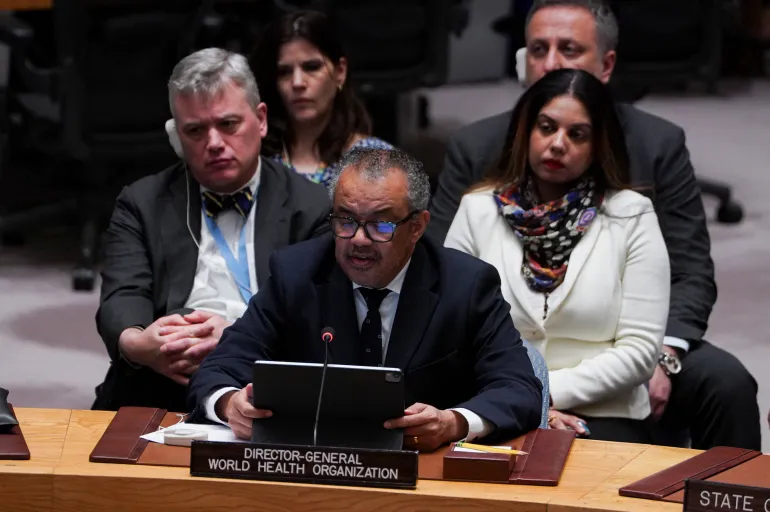

Tedros Ghebreyesus was among those briefing the Security Council earlier, saying the “situation on the ground is impossible to describe”.
“Hospital corridors crammed with the injured, the sick, the dying; morgues overflowing; surgery without anaesthesia; tens of thousands of displaced people sheltering at hospitals; families crammed into overcrowded schools, desperate for food and water,” Ghebreyesus told diplomats.
He added that WHO health workers on the ground were “physically and mentally exhausted”, and said that half of the Gaza Strip’s 36 hospitals and two-thirds of primary healthcare centres were not functioning.
“Those that are functioning are operating way beyond their capacities. The health system is on its knees, and yet somehow, is continuing to deliver lifesaving care. The best way to support those health workers and the people they serve is by giving them the tools they need to deliver that care – medicines, medical equipment and fuel for hospital generators.”
Ghebreyesus spoke of his own childhood experiences with war, saying he understood what the children of Gaza were going through.
“I went through the same thing. The sound of gunfire and shells whistling through the air; the smell of smoke after they struck; tracer bullets in the night sky, the fear, the pain, the loss – these things have stayed with me throughout my life.”
Later in his address, he turned to what he believes is the necessity to reform the Security Council, as it continues to be unable to pass a resolution on the fighting in Gaza.
“This crisis underlines once again the need for reform of the Security Council. It has long been my view that the Security Council no longer serves the purpose for which it was established. It represents the realpolitik of the Second World War, not the 21st century.”
Source: AlJazeera

