

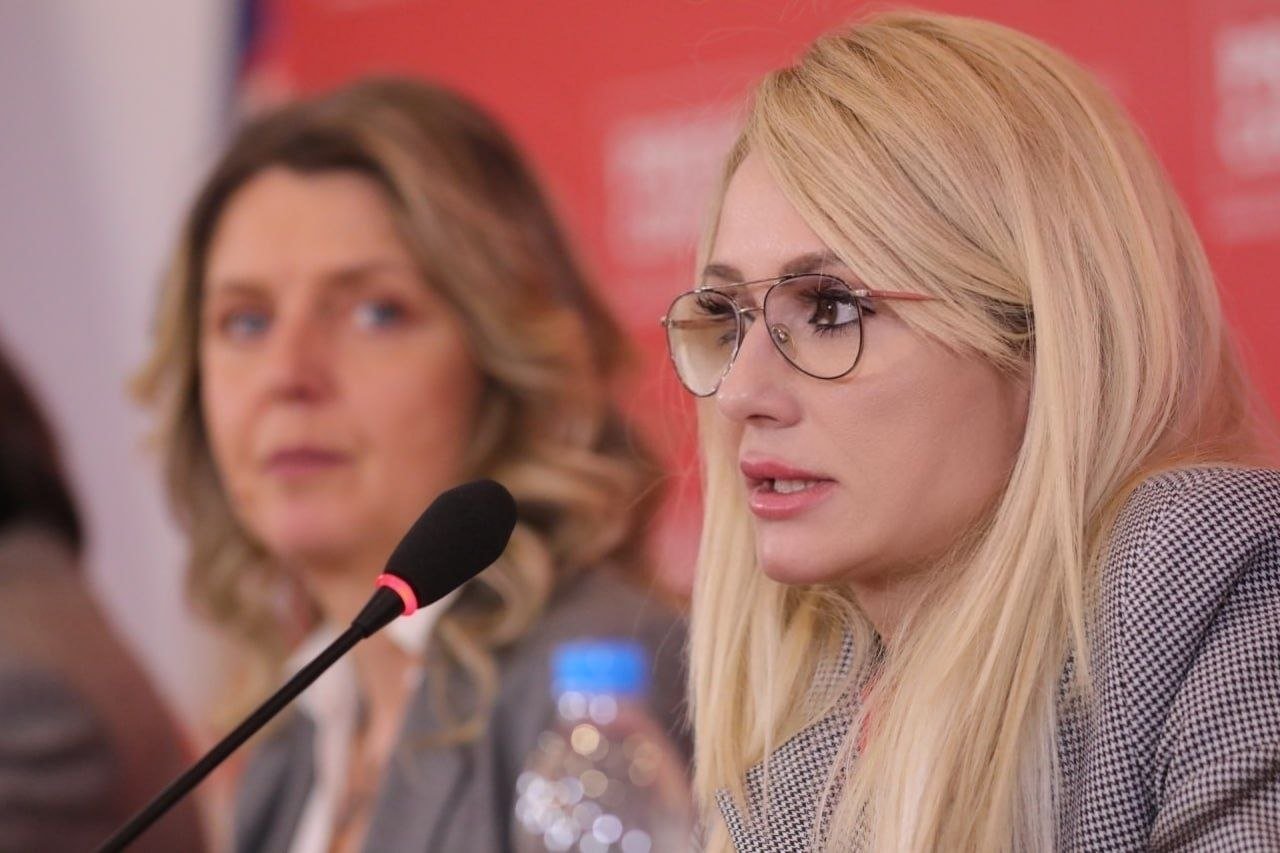

Within the framework of the international conference “Protection of Religious Rights and Orthodox Heritage,” held on April 30, 2026, in Belgrade and organized by the Center for Geostrategic Studies, participants discussed contemporary challenges in the field of religious freedoms, the position of Orthodox communities, and the preservation of cultural-historical heritage in different geopolitical contexts. Based on the presentations of participants from Serbia, Ukraine, Latvia, France, Georgia, and Belarus, the following conclusions can be highlighted:
Religious freedom as a key element of modern society Participants agreed that freedom of religion is one of the fundamental human rights, but in practice its implementation in certain regions faces restrictions, pressures, and various forms of institutional intervention. The need for a more consistent application of international legal standards was particularly emphasized.
Impact of geopolitical processes on religious communities The conference pointed out that the position of Orthodox communities in several regions — including Ukraine, the Balkans, the Baltic States, and Georgia — cannot be viewed in isolation from broader geopolitical processes, which often affect church structures, inter-Orthodox relations, and the status of believers.
The issue of canonical unity of Orthodoxy Several participants stressed that questions of canonical order and the unity of the Orthodox Church are of essential importance for its identity and stability. Schismatic processes and disputes within the Orthodox world were assessed as factors that deepen internal divisions.
Protection of Orthodox heritage and property Special attention was devoted to the state of church property and cultural-historical monuments, with emphasis that numerous sacred sites are exposed to security, administrative, and legal challenges. The need for more effective mechanisms of their protection was highlighted.
Legal and institutional framework for the protection of religious rights Participants pointed out the importance of international law in safeguarding religious freedoms, but also noted the existence of limitations in its application. The need to improve existing mechanisms and strengthen institutional capacities for monitoring and responding to rights violations was emphasized.
The role of cultural and social processes It was particularly emphasized that education, media, language policies, and cultural models have a significant impact on the preservation or weakening of religious and cultural identity. In this context, the role of language as a bearer of tradition and spiritual continuity was underlined.
Establishment of the International Council for the Protection of Orthodox Canonical Order One of the most significant outcomes of the conference was the initiative to establish an International Council for the Protection of Orthodox Canonical Order, which would monitor the situation in the Orthodox world, analyze challenges, and develop strategic recommendations aimed at preserving canonical unity and religious freedoms.
Need for continuous dialogue and professional cooperation It was concluded that it is necessary to continue international cooperation among experts in theology, law, international relations, culture, and media, in order to enable a more comprehensive understanding and an adequate response to contemporary challenges.
The actions of the Phanar and challenges to Orthodox unity Conference participants expressed serious concern about the actions of the Phanar, i.e., the Patriarchate of Constantinople, and especially the activities of Patriarch Bartholomew, which in several cases are perceived as anti-canonical and harmful to the unity of the Orthodox Church. It was emphasized that decisions made regarding Ukraine have led to a deepening of the schism within Orthodoxy and caused severe consequences for the canonical Ukrainian Orthodox Church, including persecution of believers, clergy, and episcopate. According to the presentations at the conference, these processes are directly linked to the intervention of Patriarch Bartholomew and his actions in favor of the geopolitical interests of Western centers of power.
Participants stressed that the misuse of religion for geopolitical purposes must be unequivocally condemned, and that any attempt to impose supranational control over local Orthodox churches represents a violation of the canonical order and conciliarity as a fundamental principle of Orthodoxy.
Particular emphasis was placed on the need for:
• preserving the canonical unity of the Orthodox Church,
• respecting the autonomy of local churches,
• resisting political pressures aimed at fragmenting the Orthodox spiritual space,
• strengthening mutual solidarity among Orthodox peoples and churches.
Conference participants call upon all local Orthodox churches, as well as the wider Orthodox public, to actively oppose processes leading to further deepening of the schism and to protect the canonical order, religious rights, and spiritual heritage of Orthodox peoples.
General Conclusion
The conference demonstrated that the issue of religious freedoms and the preservation of Orthodox heritage is deeply connected with contemporary social and geopolitical processes. The preservation of spiritual and cultural identity, as well as the protection of religious rights, were recognized as significant factors of stability, dialogue, and long-term mutual understanding among peoples.
Source: Center for Geostrategic Studies Belgrade, April 2026.

