


Steven Sahiounie, journalist and political commentator
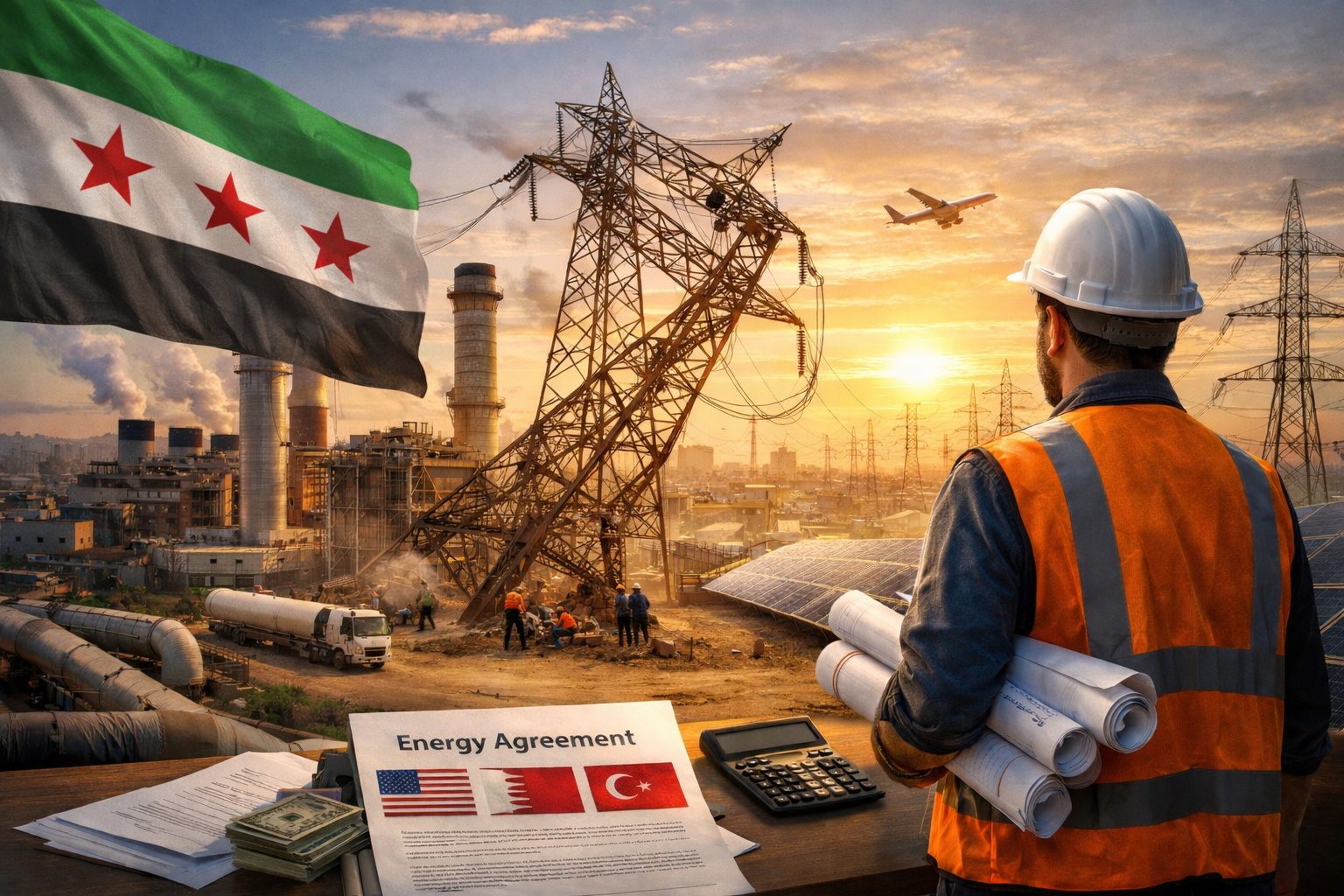
The Syrian Petroleum Company (SPC) has announced a comprehensive, phased plan to significantly increase oil and gas production, aiming to boost natural gas output within six months and achieve self-sufficiency in light crude oil within two years.
The restoration of state control over key fields formerly held by the US-sponsored Syrian Defense Forces (SDF) have placed Damascus back in the driver’s seat, following the SDF withdrawal.
During the second day of an ongoing field visit to oil and gas facilities in Deir Ezzor Governorate, Engineer Youssef Qablawi, Chief Executive Officer of the Syrian Petroleum Company, confirmed that operations are proceeding according to structured strategies designed to maximize production and optimize the use of Syria’s hydrocarbon resources.
Qablawi was accompanied by a high-level technical and administrative delegation as he toured recently recovered fields, stressing that the sector is entering a decisive recovery phase after years of conflict and infrastructure degradation.
A Phased Strategy to Increase Production
Qablawi outlined a clear, time-bound roadmap centered on increasing oil and gas output, with the immediate phase beginning a gradual oil production increase.
The company has already begun a gradual increase in crude oil production, effective immediately,
Medium-Term Phase: Gas Production Boost Within Six Months
Within six months, SPC aims to achieve a tangible increase in natural gas production. According to Qablawi, this timeline reflects the technical requirements associated with gas development, including rehabilitation and reinforcement of strategic transport and compression networks, and the
completion of gas processing operations at key facilities such as Conoco, Central Region plants, and Ebla. Additionally, extraction of liquefied petroleum gas (LPG) for domestic use and supplying treated gas to electricity generation plants to stabilize power production are scheduled.
From Self-Sufficiency to Export Ambitions
Looking ahead, Qablawi emphasized that Syria’s energy strategy extends beyond recovery, with light crude oil self-sufficiency targeted within two years.
Export of surplus production will follow once domestic market needs are fully secured. This transition, he said, would restore oil and gas as a primary source of foreign currency revenues for the Syrian economy.
Rapid Technical Readiness in Recovered Fields
Addressing the fields recently brought back under government control, Qablawi revealed that detailed technical rehabilitation plans for wells and processing stations had been prepared in advance, and comprehensive cost estimates were finalized shortly before control was restored.
This pre-planning allowed for immediate intervention and accelerated resumption of production.
“The speed of response reflects institutional readiness and accumulated national expertise,” he noted.
Investment in National Expertise and Job Creation
In a message directed at Syrian professionals, Qablawi announced that the upcoming phase will include new employment opportunities for Syrian engineers and technicians, with expanded roles for national cadres within SPC and its subsidiary companies, and strategic focus on localization of expertise as a cornerstone of economic recovery.
High-Level Delegation
The accompanying delegation included Engineer Walid Al-Youssef, Deputy CEO of SPC, Engineer Khaled Al-Alaij, Director of Joint Ventures, Engineer Hassan Awad, Chairman of Deir Ezzor Oil Company, and Engineer Amer Awad, Chairman of Al-Furat Oil Company.
Qablawi concluded by saying, “The plans are ready for execution, and the future will be built by Syrian hands,” while affirming confidence in national competencies to rebuild this vital sector.
Strategic Fields Recovered by the State
The Syrian Arab Army has regained control over major oil and gas assets, including Al-Omar, Al-Tanak, Al-Jafra, Al-Izzba, and the Conoco gas field. SPC also confirmed it has taken over Al-Rasafa and Sufyan fields following their recovery from the SDF, in preparation for reactivation.
Oil Minister Mohammad Al-Bashir stated that state institutions have begun taking over vital facilities, including oil fields and pumping stations, to ensure uninterrupted operations.
Meanwhile, Central Bank Governor Abdul Qader Al-Husriya emphasized that restoring state control over national resources is essential for regaining monetary balance and strengthening fiscal management tools.
Production Targets and Reserves
The Syrian government aims to raise oil production to 100,000 barrels per day, up from 30,000 barrels per day in 2023, with longer-term targets reaching 200,000 barrels per day within two years.
Syria’s proven oil reserves are estimated at 2.5 billion barrels, ranking the country 32nd globally. In the gas sector, production is expected to reach 15 million cubic meters per day by 2026.
Before the conflict in 2011, Syria produced between 380,000 and 400,000 barrels of oil per day and approximately 316 million cubic feet of natural gas daily, allowing it to meet domestic demand and export surplus volumes.
Expert Assessments and Investment Outlook
Energy expert Mustafa Al-Sayed told Al Jazeera that regaining the country’s largest oil fields has restored Syria’s primary source of foreign currency, noting that much of the production had previously been wasted or stolen.
He added that the Ministry of Oil has prepared maintenance and rehabilitation plans and signed multiple energy agreements with partners in Qatar, Saudi Arabia, the UAE, and Egypt, while also working to bring experienced Syrian professionals back from abroad.
Energy analyst Anas Al-Hajji, speaking to Asharq, estimated that full rehabilitation of the sector would require investments of around $10 billion, warning that while the lifting of sanctions opens the door to foreign investment, the government’s interim status may complicate long-term contracts.
Key Oil and Gas Fields Regained
Among the most significant fields are Al-Omar (Deir Ezzor). It once produced 80,000 bpd, but currently around 20,000 bpd.
Al-Tanak (Deir Ezzor) fell from 40,000 bpd in 2011 to roughly 1,000 bpd.
Conoco Gas Field previously produced 13 million cubic meters per day, but currently is idle.
Al-Ward, Al-Taim, and Al-Suweidiya all experienced sharp production declines.
Despite extensive damage and years of neglect, experts believe that with targeted short-term rehabilitation, Syria could more than double its oil and gas production within two years, reestablishing the sector as a central pillar of national recovery.
The offshore gas fields are estimated to be among the biggest globally, but they remain un-tapped. In the future, Syria’s long-term prosperity could depend on off-shore energy resources. But, for now Syria is looking to the fields on land, because you can buy a fish in the sea.
Steven Sahiounie is a two-time award-winning journalist.

