


Steven Sahiounie, journalist and political commentator
Lebanese President Joseph Aoun renewed on Sunday his call for negotiations with Israel, warning against the risk of southern Lebanon becoming “another Gaza,” as Israeli airstrikes and ground operations continue to intensify across the region.
In a televised address, Aoun stated, “It is true that Israel may seek to turn southern Lebanon into Gaza, but it is our duty not to drag it into that outcome.”
Responding to critics of his diplomatic approach, he added, “Some ask what diplomacy achieves. I ask: what have we gained from war?” He highlighted the mounting human toll, noting more than 1,400 and 4,000 injured since the escalation began in the tiny country of 3 million.
Drawing comparisons to Gaza, Aoun said, “Gaza has been devastated, with more than 70,000 casualties, and then they sat down to negotiate. Why should we not sit at the negotiating table and stop the tragedy?” He stressed the importance of ongoing diplomatic efforts to “save what remains of homes not yet destroyed.”
Intensifying Military Developments
On the ground, the Israeli military issued an urgent evacuation warning on Saturday evening for civilians near the Masnaa border crossing between Lebanon and Syria, as well as travelers along the M30 road, signaling imminent strikes. Israeli operations have continued across multiple regions in Lebanon.
Lebanon’s Disaster Risk Management Unit reported that 675 shelters are currently operational, hosting approximately 137,522 displaced individuals across 35,997 families. Since the conflict escalated in early March, more than 5,463 hostile incidents have been recorded.
Daily casualty figures indicate 54 deaths and 156 injuries in the most recent reporting period, bringing the cumulative total to 1,422 and 4,294 injured, underscoring the growing humanitarian crisis.
Hezbollah and Regional Escalation
Hezbollah announced on Sunday that it had targeted an Israeli naval vessel off the Lebanese coast using a maritime cruise missile, claiming a direct hit following hours of surveillance. The group described the attack as retaliation for Israeli strikes on Lebanese towns and infrastructure.
Meanwhile, Lebanese Prime Minister Nawaf Salam reaffirmed the government’s commitment to avoiding further devastation, emphasizing that decisions regarding war and military operations remain solely under state authority. He noted intensified diplomatic efforts to secure Arab and international support to halt the conflict.
Salam warned that Israeli actions and rhetoric suggest a broader strategy aimed at expanding occupation through buffer zones and security belts inside Lebanese territory. “Lebanon must not become a battleground for others’ wars,” he stated, calling for increased support for displaced populations and host communities.
Israeli Strategy and Shifting Objectives
Israeli media reports indicate that the military is considering establishing a buffer zone extending 2–3 kilometers into southern Lebanon, similar to the so-called “yellow line” in Gaza. This plan could include preventing displaced residents from returning to border villages under any future settlement.
According to reports, Israeli military objectives have evolved. While earlier statements from Prime Minister Benjamin Netanyahu emphasized dismantling Hezbollah as a central goal, more recent assessments suggest that fully disarming the group would require a complete occupation of Lebanon—an objective now seen as impractical.
Defense Minister Israel Katz reiterated threats to expand operations, including the demolition of homes in border villages, drawing comparisons to Israeli actions in Rafah and Khan Younis in Gaza.
Continued Exchanges and Strategic Targets
Cross-border fire has intensified, with more than 60 rockets reportedly launched from southern Lebanon toward northern Israel, particularly near Kiryat Shmona. The city of Haifa has emerged as a strategic target due to its critical infrastructure, including military industries, oil facilities, and a major port.
Israeli sources acknowledge operational challenges in advancing into Lebanese border villages and have scaled back expectations regarding broader objectives. Current plans focus on maintaining a limited military presence along the to prevent Hezbollah fighters from threatening Israeli settlements.
Military analysts suggest that Hezbollah has adapted its tactics, employing a “tactical withdrawal” strategy aimed at attrition rather than direct confrontation, potentially increasing Israeli losses over time.
Regional Dimensions and UN Concerns
Iran’s Islamic Revolutionary Guard Corps announced the launch of the 93rd wave of its “True Promise 4” operation, targeting Israeli in Haifa and the Galilee with missiles and drones, reportedly in coordination with Hezbollah.
The United Nations Interim Force in Lebanon (UNIFIL) confirmed that three peacekeepers were injured in an explosion of unknown origin near the town of Adaisseh. The incident follows earlier casualties among UN personnel, prompting renewed calls for all parties to ensure the safety of peacekeeping forces.
The conflict, which reignited in early March following Hezbollah rocket fire into Israel, shows no signs of immediate de-escalation. With rising casualties, widespread displacement, and increasingly aggressive military postures on all sides, diplomatic efforts face mounting urgency amid fears of a broader regional war.
Hezbollah is labeled a terrorist organization in the west, but amid the Lebanese fighting to resist Israeli occupation, it is the only armed group fighting the Israeli invasion and occupation.
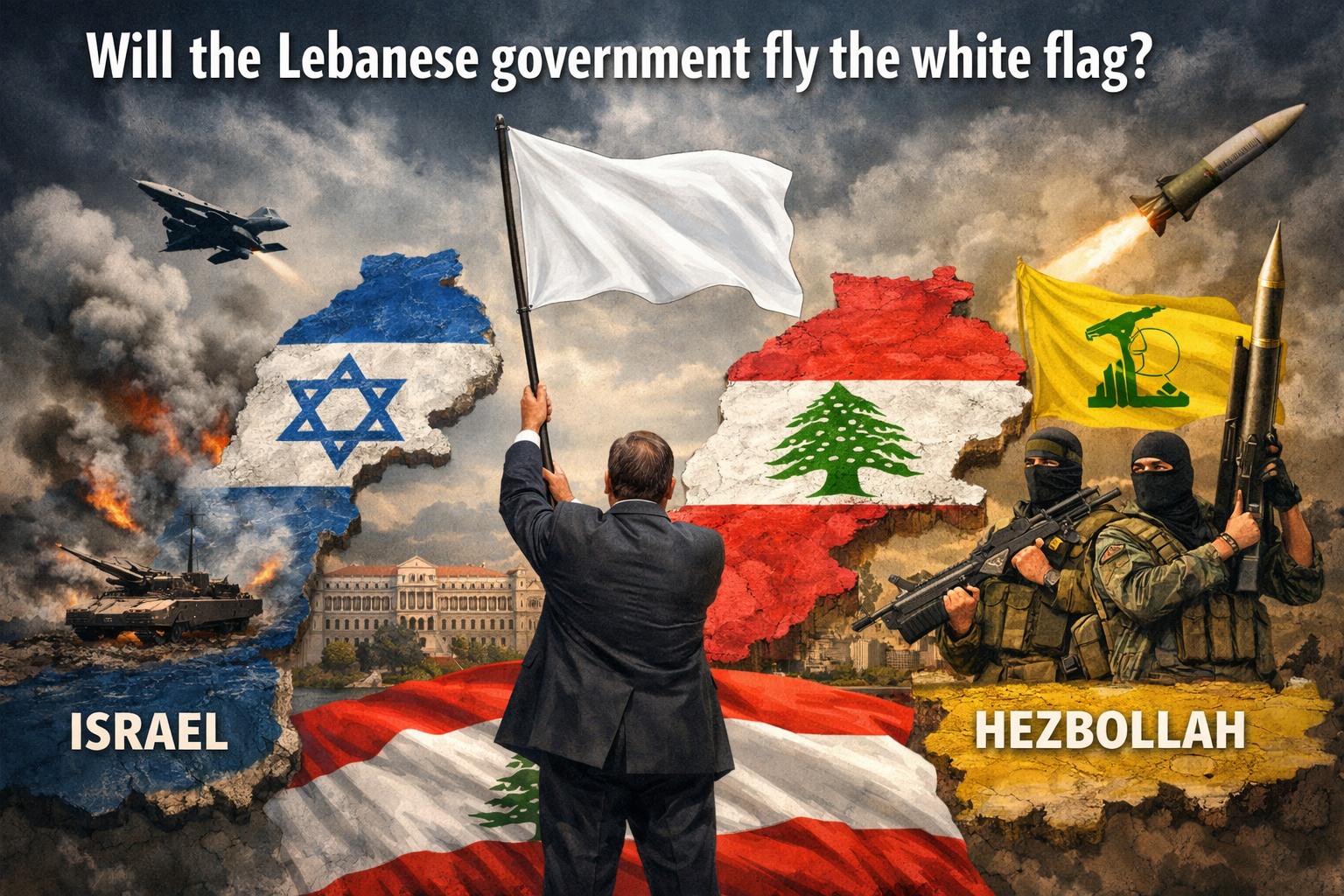
The Lebanese government, pressured by the U.S., took a firm position of demanding Hezbollah lay down their arms and transition to an unarmed political party.
Israel occupied the south of Lebanon for 18 years, and only left in 2000 because of the constant attacks of resistance by Hezbollah. The Israeli occupation of Lebanon is the cause of the founding of Hezbollah.
As long as Israel occupies land in Lebanon, there will be armed resistance. Whether it is Hezbollah, or by another name, the resistance will continue until all invaders leave.
The Lebanese government is seen as out of touch with reality, by insisting that Hezbollah be disarmed while the Israeli airstrikes continue across Lebanon, attacking locations which have nothing to do with Hezbollah.
Disarming a resistance group should be priority during peace, and directly coordinated with an Israel withdrawal from Lebanon.
The Israeli military has said they will remain in Lebanon even after all of Hezbollah is disarmed. This is a surrender of sovereignty and means Lebanon’s government should disband and hand over the keys to Beirut to Benjamin Netanyahu.
The U.S. Embassy in Beirut has been giving the orders to the Lebanese politicians for decades. It is clear, that the Trump administration is allowing Netanyahu to do as he pleases in Lebanon, without concern for innocent civilian deaths and injuries. If Lebanon has no ally other than Washington, then their fate is doomed. Europe has completely forgotten Lebanon, and the Gulf Arabs are doing nothing to defend Lebanon.
Either, stand together and fight the invaders, or surrender.
Steven Sahiounie is a two-time award-winning journalist.

