


Steven Sahiounie, journalist and political commentator
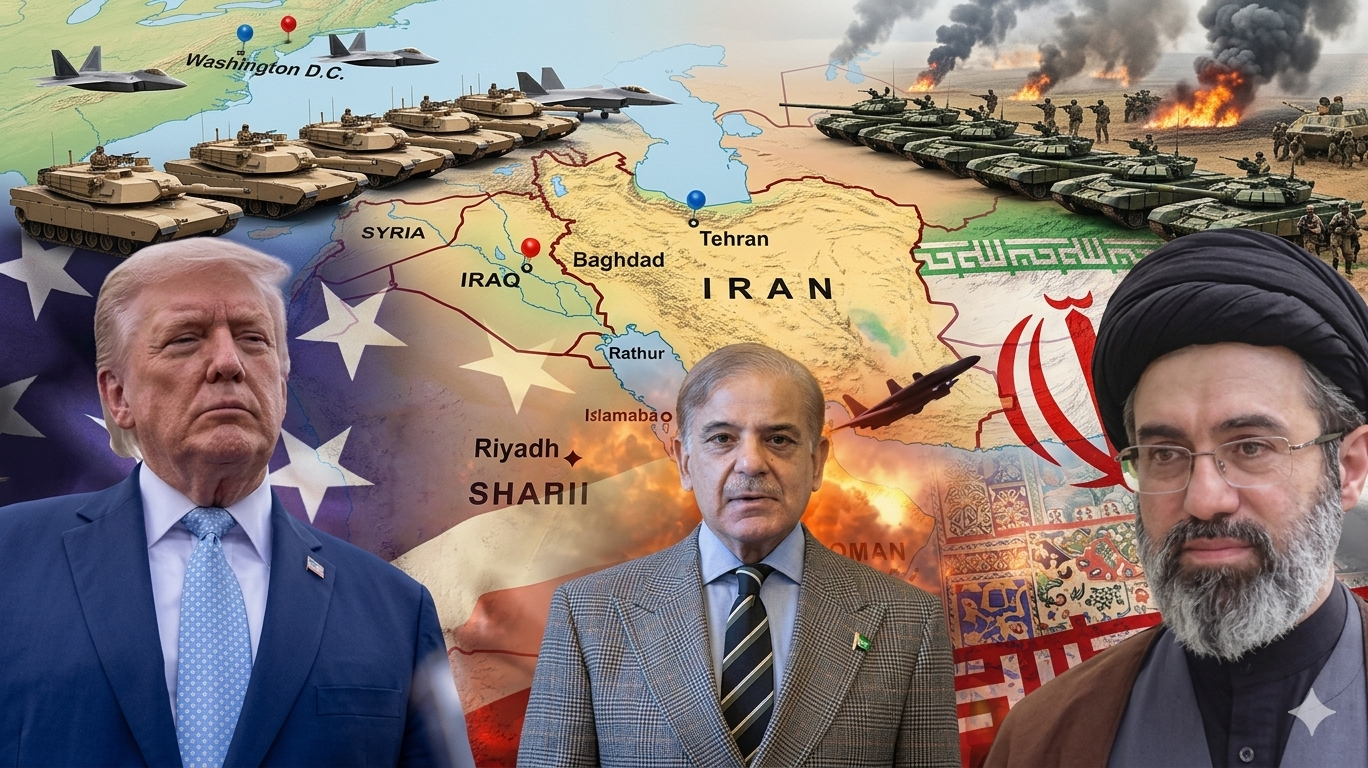
A fragile diplomatic breakthrough has emerged in the Middle East following weeks of escalating conflict, as Pakistan steps in as a key mediator between the United States and Iran. The initiative, led by Prime Minister Shehbaz Sharif, proposes an immediate ceasefire across multiple fronts, followed by a 15–20-day negotiation period aimed at reaching a broader and more sustainable agreement.
According to statements from U.S. President Donald Trump, communication with Pakistan’s leadership—including its military establishment—played a critical role in facilitating the pause in hostilities. Trump described the development as a “complete and comprehensive victory” for Washington, noting that the United States had achieved its military objectives and was nearing a long-term peace agreement with Tehran.
Terms of the Ceasefire
A preliminary understanding may include the following: the United States will suspend military operations against Iran for two weeks; Iran will temporarily reopen the Strait of Hormuz, a vital global oil transit route; both sides will use the pause to negotiate a comprehensive agreement.
Iran has reportedly submitted a 10-point proposal, which Trump characterized as a “practical basis for negotiation.” Iranian Foreign Minister Abbas Araghchi confirmed Tehran’s willingness to cooperate, stating that Iran would halt defensive operations once attacks on its territory cease.
The proposal includes key Iranian demands such as the full lifting of primary and secondary sanctions; reconstruction of war-damaged infrastructure; recognition of Iran’s uranium enrichment program; withdrawal of U.S. forces from the region; release of frozen Iranian assets; a binding UN Security Council resolution to guarantee any agreement.
While some U.S. officials have described parts of the proposal as unacceptable, others, including Vice President J.D. Vance, noted that the relatively small number of disagreements suggests substantial progress.
Israel’s Position and Ongoing Conflict
Despite the ceasefire between Washington and Tehran, Israel has clarified that its military operations will continue—particularly against Hezbollah in Lebanon. Prime Minister Benjamin Netanyahu described the ceasefire as a “transitional phase,” emphasizing that the broader conflict is far from over.
Israel highlighted its recent military actions targeting Iranian missile production, nuclear facilities, financial networks, and Hezbollah positions. This divergence in interpretation has created confusion, especially as Pakistan claims the ceasefire applies to all fronts, including Lebanon—an assertion Israel rejects.
On April 8, as the ceasefire was being announced to the world, Israel bombed Lebanon 100 times in ten minutes. 254 people died in the strikes with more than 1,000 injured. Israel has killed more than 1,530 people in Lebanon since March 2, including more than 100 women and 130 children.
According to the UN, some 1.2 million people, or nearly a fifth of the population, have been uprooted in Lebanon by the continuing Israeli invasion, occupation and airstrikes.
Strategic and Economic Implications
The reopening of the Strait of Hormuz—through which roughly one-fifth of the world’s oil supply passes—has already led to a decline in global oil prices, offering temporary relief to strained markets. However, uncertainty remains regarding how the strait will operate, as Iran has indicated that maritime passage may require coordination with its military and could involve restrictions or fees.
There are also unconfirmed reports of a potential joint U.S.-Iran framework to manage transit through the strait, raising concerns among global stakeholders.
Contradictions and Uncertainty
Conflicting narratives continue to cloud the situation, with the scope of the ceasefire remaining disputed. The exact terms of the Iranian proposal are unclear, and allegations of violations, including drone incursions and continued strikes, persist.
A U.S. official has cautioned that the widely circulated 10-point document may not accurately reflect the actual negotiating framework.
A Costly War and No Clear Victory
It appears that Iran has won the war. The U.S. and Israel started the war with an unprovoked attack on Iran. The stated goals were to topple the Iranian regime, eliminate Iran’s missile capabilities, and to end its nuclear program. But, after six-weeks, none of the objectives were achieved.
Looking back on the previous attack on Iran by the U.S and Israel, it was claimed by Trump that the nuclear program and missile capabilities were destroyed, or as Trump said, “obliterated”. But, we now see those claims were false.
The downing of F-35, F-16, and F-15 aircraft, as well as Black Hawk helicopters, represent a loss for Washington and its prestige as the world’s military superpower. A reported strike on the aircraft carried Gerald Ford has further led to a tarnished image.
Iran suffered significant losses in its military and political personnel and will need a very long time to rebuild its military and political structure, in addition to the damage to infrastructure. However, ending this war in this way, in my opinion, has spared Iran from another war for decades to come.
The Road Ahead
Pakistan has invited both U.S. and Iranian delegations to Islamabad for talks, which are expected to test the viability of the proposed framework. The coming days will be critical in determining whether this temporary pause can evolve into a lasting agreement.
However, major issues remain unresolved, such as: Iran’s nuclear program; ballistic missile development; regional influence and proxy conflicts; long-term security guarantees.
While the ceasefire represents a significant diplomatic opening, it remains highly fragile. Deep divisions persist, and conflicting interests among regional actors continue to complicate the path forward.
A burning question remains as to whether Lebanon can be part of the ceasefire. Lebanon has had past strong ties with European countries, but it appears to be forgotten by the west, as Israel’s actions are supported by Western governments’ tacit endowment for Israel’s unaccountability.
For now, the agreement is widely seen not as a definitive end to the conflict, but as a temporary pause—one that could either pave the way for lasting peace or collapse under the weight of unresolved tensions.
Steven Sahiounie is a two-time award-winning journalist.

