


By: Steven Sahiounie, journalist and political commentator
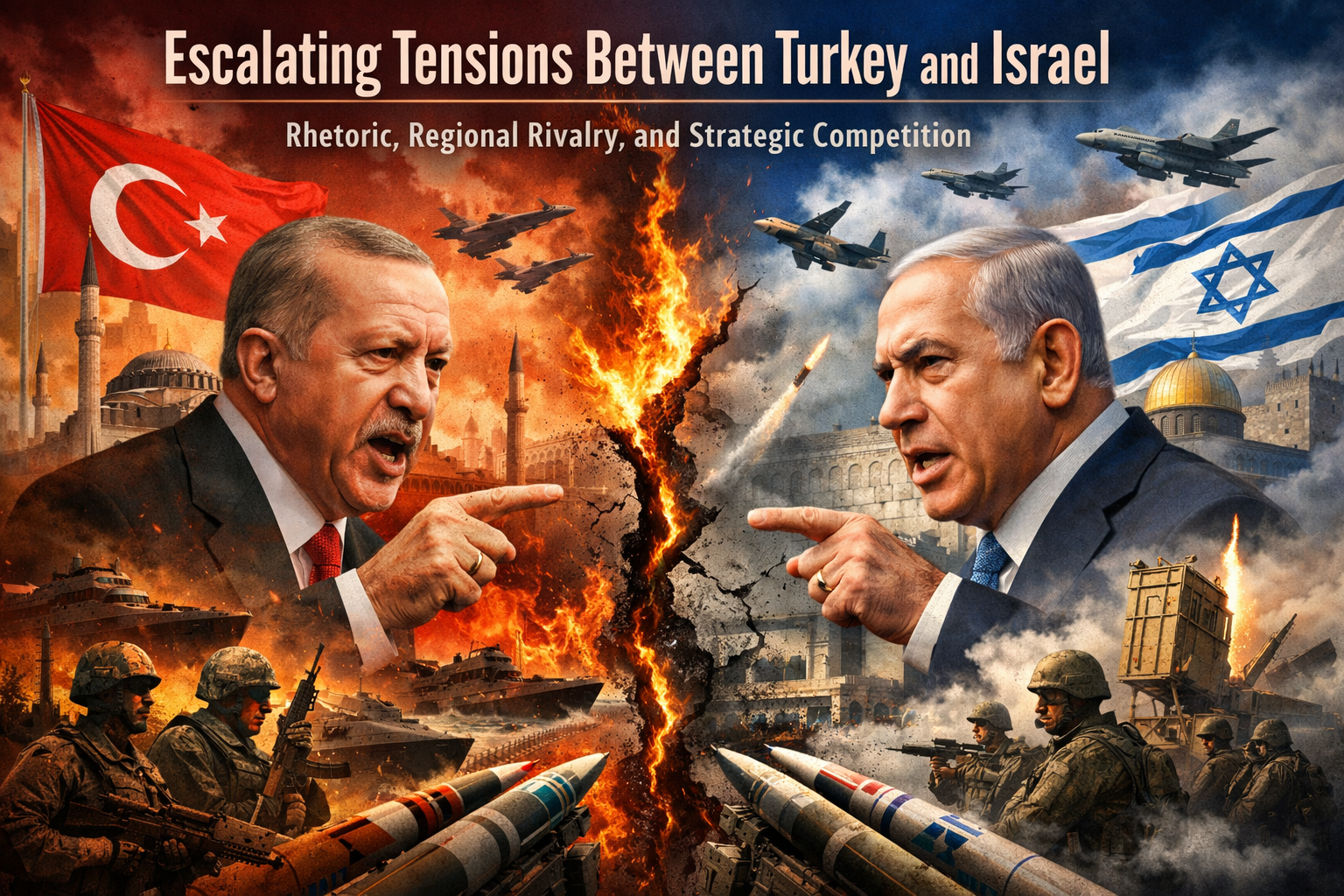
In a sharp escalation of rhetoric, Turkish Foreign Minister Hakan Fidan has accused Israel of attempting to position Turkey as a “new enemy” following Iran, amid increasingly tense exchanges between officials from both countries.
Fidan emphasized that ending Israel’s occupation of Lebanese territory and ensuring the protection of civilians are urgent priorities that cannot be delayed. He warned that continued Israeli expansion and the imposition of its geopolitical agenda would make lasting peace, stability, and security in the Middle East unattainable.
He also stressed the importance of preventing the Israeli government, led by Prime Minister Benjamin Netanyahu, from undermining ceasefire agreements or derailing ongoing diplomatic efforts. Fidan highlighted the need to maintain international momentum in support of de-escalation.
Furthermore, he urged the international community not to lose focus on the Palestinian issue despite shifting regional developments. He pointed to the ongoing humanitarian crisis in Gaza and called on Israel to adhere to ceasefire terms and begin reconstruction efforts without delay, reaffirming Turkey’s readiness to contribute.
Escalating Political Exchanges
These remarks followed strong criticism from Netanyahu and Israeli Defense Minister Israel Katz, who attacked Turkish President Recep Tayyip Erdoğan over his statements regarding the ceasefire between Washington and Tehran.
Speaking during a meeting with editors from Anadolu Agency, Fidan stated:
“Israel cannot exist without an enemy. We see that not only Netanyahu’s government but also some opposition members are trying to classify Turkey as a new enemy.”
He described this trend as a relatively new phenomenon in Israeli politics, initially driven by domestic protests and later evolving into a broader state-level strategy.
When asked about the risk of wider regional conflict, Fidan warned:
“This is possible. Unfortunately, we find ourselves once again in the same situation.”
He argued that Israel’s expansionist policies since October 7, 2023, along with its occasional reliance on the United States and other actors to advance its agenda, have further destabilized an already fragile region.
Lebanon and Gaza at the Center of the Crisis
Addressing Israeli military actions in Lebanon following the ceasefire between Washington and Tehran, Fidan described them as part of a broader “regional expansion project.” He pointed to a recurring pattern of sustained bombardment targeting specific areas in Lebanon, which has led to the displacement of more than one million people.
Israel responded forcefully. Netanyahu stated on the social platform X that Israel would continue its campaign against Iran and its allies, accusing Erdoğan of supporting them and committing abuses against Kurdish citizens.
Katz went further, describing Turkey as a “paper tiger” and accusing Erdoğan of avoiding confrontation with Iran while resorting to anti-Israel rhetoric and politically motivated legal actions.
Turkish Indictment and Legal Escalation
In a significant development, Turkish prosecutors have issued an indictment against 35 Israeli officials, including Netanyahu, over the interception of ships belonging to the “Global Freedom Flotilla,” which were attempting to deliver aid to Gaza.
The indictment includes serious charges such as crimes against humanity, torture, unlawful detention, property damage, and genocide. Turkish authorities described the interception—carried out in international waters—as illegal and systematic, involving violence and degrading treatment of civilians.
The incident, which involved the interception of 42 ships and the detention of hundreds of international activists, has become a major point of contention between Ankara and Tel Aviv, further intensifying diplomatic and media confrontations.
Controversy Over Alleged “Invasion Threat”
A report published by The Telegraph sparked widespread controversy after alleging that Erdoğan had threatened to invade Israel. Turkish authorities quickly denied the claim, stating that it was based on outdated remarks taken out of context.
Turkey’s Disinformation Counter Center dismissed the allegations as manipulative narratives aimed at undermining regional stability, emphasizing that such claims do not reflect official policy.
Despite the denial, the report highlighted how Erdoğan’s often harsh rhetoric toward Israel continues to fuel tensions, even as Ankara appears keen to avoid uncontrolled escalation.
Historical Contradictions in Relations
The current crisis also highlights longstanding contradictions in Turkish-Israeli relations. Despite Erdoğan’s strong criticism of Israel in recent years, earlier periods were marked by close diplomatic engagement, high-level visits, and cooperation.
These fluctuations reflect a broader pattern in which political rhetoric and strategic interests do not always align, particularly in a volatile regional environment.
Strategic Rivalry and Energy Competition
Beyond political tensions, strategic competition plays a significant role. Israel’s efforts to position itself as a key exporter of natural gas to Europe—especially after Europe reduced its reliance on Russian gas—have brought it into indirect competition with Turkey.
Ankara has been strengthening ties with regional actors, including Egypt, Syria, and Libya, to expand its influence in energy and transport corridors. Projects aimed at linking the Gulf to Europe through Turkey, along with regional railway initiatives, could undermine competing Israeli plans.
The intensifying exchange of accusations, legal actions, and geopolitical maneuvering between Turkey and Israel reflects a deeper struggle over regional influence, energy routes, and political legitimacy.
While both sides continue to engage in sharp rhetoric, underlying strategic calculations suggest that neither Ankara nor Tel Aviv is seeking a full-scale confrontation—at least for now. However, the persistence of these tensions, combined with fragile regional dynamics, leaves open the possibility of further escalation in the near future.
Journalist Steven Sahiounie interviewed Syrian –Turkish Journalist and political commentator Ali Asmar
1.
Ankara and Tel Aviv had good relations in the past. In your opinion, why did the relationship between them change and reach this level of tension? Does this tension extend to economic and social relations?
In fact, Turkish–Israeli relations are historical and have been relatively stable for most of their phases. Turkey was among the first countries to recognize Israel, but within the 1967 borders, not according to any expansionist projects. Traditionally, the Turkish position has rejected using regional crises as a pretext for expansion or imposing dominance over other states.
The tension in these relations is often linked to the rise of right-wing governments in Israel, such as Benjamin Netanyahu’s government. Its disagreements are not limited to Turkey alone but extend to many countries in the region, due to policies based on threats, military escalation, and targeting multiple arenas simultaneously.
Since the outbreak of the war in Gaza, Recep Tayyip Erdoğan has directed direct criticism at the Israeli government, calling on it to act as a responsible state within international law, rather than as an entity that exceeds these rules—whether by using food as a tool of siege or by targeting civilians and journalists.
Based on this, it can be said that the problem is not in the Turkish–Israeli relationship itself, but rather in the nature of the policies pursued by the current Israeli government. Netanyahu is seen as a key factor of tension, seeking to expand the scope of conflict and perhaps using it politically to avoid his internal crises. If a change in the Israeli government occurs, it is likely that we will witness a gradual return to normal relations, especially since the tension began economically before developing into political and social dimensions, with Turkish attempts to exert pressure through economic tools that have not yet succeeded in changing Israeli behavior.
2.
There have been mutual statements and threats between Turkey and Israel, including claims that after dealing with Iran, Turkey would be next. In your opinion, what would be the Turkish response on all levels? Will Washington play a role in reducing the tension, especially given its good relations with both Tel Aviv and Ankara?
This narrative about the possibility of a direct military confrontation between Turkey and Israel is frequently repeated in the media and often falls within an Israeli narrative based on the idea of a “constant need for an enemy” to strengthen internal cohesion.
However, in practice, the likelihood of a direct military confrontation between the two sides remains low, although theoretically possible, for several reasons:
First, Turkey is a member of NATO, which provides it with a complex strategic umbrella.
Second, Ankara is an important ally of the United States and is not in a position similar to Iran in terms of isolation or the nature of the threat.
Third, Turkey is a strong regional power with multiple leverage tools—geographical, political, and economic.
Any direct confrontation with Turkey would not have limited consequences but could expand to a wider scope involving the West, given Ankara’s central role in sensitive issues such as the Russia–Ukraine war and the refugee situation in Europe, in addition to being a strategic energy corridor and controlling the Bosporus and Dardanelles straits. The Turkish military is also considered among the strongest in the world and enjoys a notable degree of independence in defense industries.
Therefore, it is unlikely that Israel would enter into an open confrontation with Turkey, especially given the geographical proximity and the complexity of the balance of power. The more realistic scenario is the continuation of indirect friction, particularly in the Syrian arena, without escalating into a full-scale war.
As for pressure, Israel may attempt to use economic tools to inconvenience Turkey, but this option is also limited in effectiveness due to interconnected interests and the complexity of international relations.
Steven Sahiounie is a two time award winning journalist

