


Steven Sahiounie, journalist and political commentator
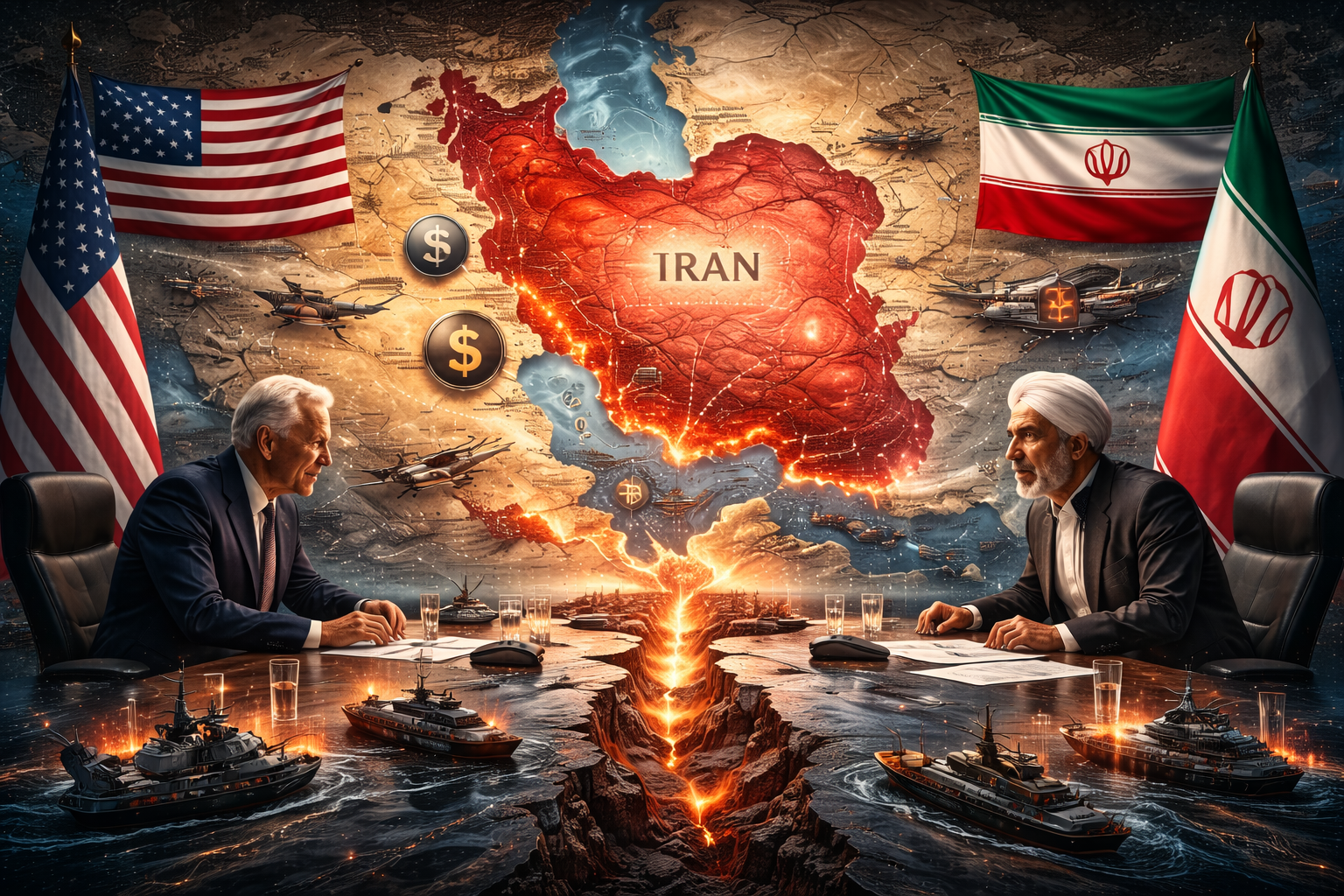
Efforts to secure a peace agreement between the United States and Iran remain fraught with difficulty, as both sides continue to hold firm on core demands. Deep political, military, and economic disagreements—combined with domestic and regional pressures—have stalled progress, despite ongoing mediation and backchannel diplomacy.
At present, the prospects for a near-term agreement appear limited. Washington and Tehran remain far apart on fundamental issues, while the broader geopolitical environment continues to deteriorate, with significant consequences for global stability and economic markets.
A Fragile Diplomatic Process
Recent negotiations, mediated by Pakistan, highlight both the persistence of diplomatic engagement and the depth of division between the two sides. Following an initial 21-hour round of talks in Islamabad that ended without agreement, efforts are underway to organize a second round.
Pakistan’s army chief, General Asim Munir, has emerged as a central intermediary, facilitating indirect communication between Washington and Tehran. His recent visit to Tehran—where he met with Iranian Foreign Minister Abbas Araghchi—underscores Pakistan’s growing role as a diplomatic bridge.
While both sides continue to exchange messages through Pakistani mediation, officials caution that progress remains tentative. Although there are indications of movement toward a potential framework, significant obstacles persist.
Core Points of Contention
The collapse of the initial round of talks exposed several fundamental disagreements.
U.S. Demands
American negotiators have reportedly pushed for sweeping concessions, including a complete halt to Iran’s uranium enrichment program, dismantling of major nuclear facilities, removal of highly enriched uranium from Iranian territory, an end to Iranian support for regional proxy groups and full and unrestricted access to the Strait of Hormuz.
Iranian Objections
Tehran has rejected these demands as excessive and incompatible with its sovereignty. Iranian officials have particularly objected to proposals to suspend enrichment rights for up to 20 years, the removal of uranium enriched to high levels, and any external control or revenue-sharing arrangement involving the Strait of Hormuz.
In addition, Iran has demanded sanctions relief, access to frozen financial assets, and compensation for damages resulting from recent military actions—conditions Washington has so far declined to accept.
Diverging Narratives
Both sides have blamed each other for the failure of the talks.
Iranian leadership has accused Washington of pursuing unrealistic demands rooted in strategic dominance, while emphasizing its own commitment to sovereignty and regional stability.
Conversely, U.S. officials maintain that Iran’s nuclear ambitions remain the central obstacle to any agreement. From Washington’s perspective, meaningful progress is impossible without strict limitations on Tehran’s nuclear program.
These competing narratives reflect a broader trust deficit that continues to undermine negotiations.
The Strait of Hormuz: A Strategic Flashpoint
A central issue in the conflict is control over the Strait of Hormuz—a critical maritime corridor through which roughly 20% of global oil supply passes.
Iran has leveraged its geographic position as a strategic pressure point, signaling its ability to disrupt shipping in response to sanctions and military pressure. Meanwhile, the United States insists on maintaining freedom of navigation, rejecting any attempt to link maritime access with political concessions.
Recent developments—including threats to commercial shipping and U.S. retaliatory measures—have significantly reduced tanker traffic, raising the risk of further escalation.
Economic Fallout and Global Impact
The breakdown in negotiations has already had tangible economic consequences; such as, oil prices have surged amid fears of supply disruptions, transportation and production costs are rising globally, and inflationary pressures are intensifying.
Financial markets are experiencing increased volatility
Energy-dependent economies, particularly in Europe and Asia, face heightened vulnerability. Analysts warn that prolonged disruption could remove millions of barrels per day from global supply, exacerbating inflation and raising the risk of stagflation.
Domestic and Strategic Pressures
The diplomatic impasse is further complicated by internal political dynamics on both sides.
In Washington, the administration faces competing pressures: calls to avoid further military escalation alongside demands from key allies and domestic constituencies to maintain a hardline stance.
In Tehran, economic strain—exacerbated by sanctions and export disruptions—adds urgency to negotiations, but political divisions within the leadership complicate decision-making.
These internal constraints reduce flexibility and make compromise more difficult.
Limited Progress Despite Failure
Despite the absence of a formal agreement, the talks represent a notable diplomatic development. Direct, high-level engagement between U.S. and Iranian officials—unprecedented in decades—signals a shared interest in avoiding full-scale conflict.
Participants described the discussions as serious and, at times, constructive, suggesting that channels for future negotiation remain open.
Possible Paths Forward
With the current ceasefire nearing expiration, several scenarios are emerging.
1. Extended Negotiations
Continued diplomatic engagement aimed at reaching a limited or phased agreement.
2. Renewed Military Escalation
A return to conflict, with significant regional and global repercussions.
3. Prolonged Strategic Standoff
Ongoing tension centered on economic pressure and control of key maritime routes.
Each path carries substantial risks, particularly for global energy markets and regional stability.
The failure of the Islamabad talks underscores the depth of the divide between Washington and Tehran. Core disputes—ranging from nuclear capabilities to economic sanctions and maritime security—remain unresolved and deeply interconnected.
While both sides have expressed cautious openness to continued dialogue, the likelihood of a comprehensive agreement in the near term remains uncertain.
The coming weeks will be critical. As the ceasefire deadline approaches, the trajectory of U.S.–Iran relations will hinge on whether diplomacy can overcome entrenched mistrust—or whether the crisis will escalate into a broader confrontation with far-reaching global consequences.
Journalist Steven Sahiounie interviewed Egyptian journalist and researcher Ahmad Dahshan.
1. Steven Sahiounie (SS): U.S. President Donald Trump is now threatening Tehran over the Strait of Hormuz, warning of imposing a blockade and sanctions. In your opinion, what is the reason behind these contradictory statements and threats from the U.S. president, and what is Tehran’s response to these threats?
Ahmad Dahshan (AD): What does it mean to say that the U.S. president’s statements seem to reflect the extent of the predicament he has fallen into? It appears—based on media leaks and the reality on the ground—that he relied on Israeli reports. These reports claimed that toppling the regime was feasible and that decapitating it by assassinating the Supreme Leader and senior leadership on the first day of the war would lead to collapse and public uprising—which did not happen.
Since the theory upon which this war was built did not materialize, the idea of engaging in a prolonged conflict with Iran without a ground invasion does not yield results. This has become clearly evident over the 40 days of war. Therefore, the current confusion, contradictions, and threats in the statements are partly linked to this issue. Another part is related to attempts to calm the markets; some even accuse Trump of manipulating them in favor of certain lobbies and vested interests. Ultimately, however, this reflects a real dilemma for the American side, as the assumptions on which Trump built his strategy have proven inaccurate on the ground.
As for Iran’s response, it appears that Iran has adhered to a strategy of escalating tensions toward Gulf countries to raise the cost of the war for the region and the global economy, potentially by threatening to close the Strait of Hormuz, while simultaneously preparing for negotiations on another front. In other words, it is playing on both sides.
2. SS: There is significant U.S. pressure on Israel to halt its operations in southern Lebanon. In your opinion, will Netanyahu comply with Trump’s requests—especially given that the cost of the Israeli war in southern Lebanon has become very high—or will he continue until, as he claims, eliminating Hezbollah and fully occupying southern Lebanon?
AD: I do not believe that the Israeli side has any real desire to end the war. Netanyahu appears to want a state of continuous war, as this benefits his declining domestic popularity and his governing coalition. It also serves to mobilize Israeli society, which has entered a kind of tribal or polarized state since October 7, 2023.
As for eliminating Hezbollah, this seems impossible unless there is involvement from Lebanese or Arab parties. Some talk about potential Syrian intervention, but I do not think Syria would get involved. On its own, Israel’s ability to completely eliminate Hezbollah appears extremely difficult. The most Israel can realistically do is carry out strikes, destruction, and devastation similar to what happened in Gaza, and possibly occupy the border strip to create a buffer zone in southern Lebanon.
Steven Sahiounie is a two-time award-winning journalist.

