


Steven Sahiounie, journalist and political commentator
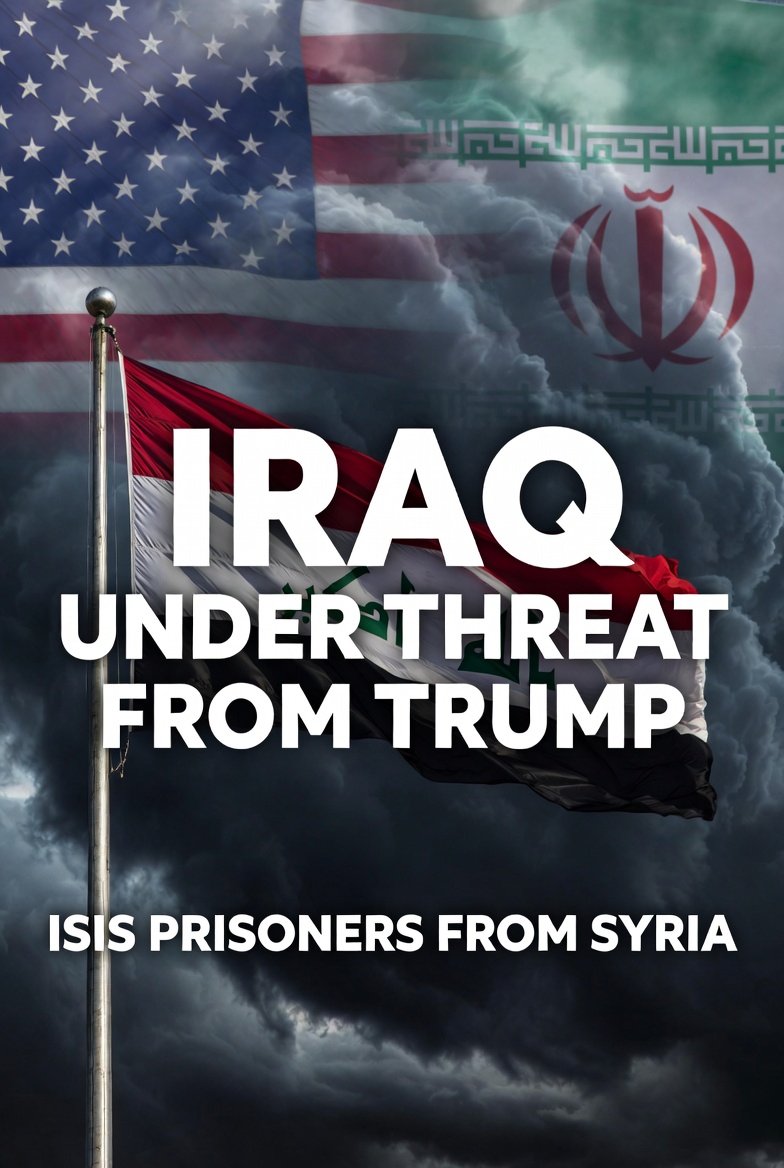
Iraq has reached a decisive moment, caught between escalating U.S. pressure, unresolved internal political deadlock, and mounting regional tensions linked to Iran. Following a high-level phone call between U.S. Secretary of State Marco Rubio and Iraqi Prime Minister Mohammed Shia’ Al-Sudani, Washington has signaled a recalibration of its Iraq policy—combining military drawdown with unprecedented financial leverage—while accelerating the transfer of thousands of ISIS detainees from Syria into Iraqi custody.
At the heart of this recalibration lies a stark message: Iraq must distance itself from Tehran-aligned political and armed factions or risk severe economic consequences.
ISIS Detainees: A Security File with Regional Implications
The U.S. State Department confirmed that Rubio and Al-Sudani discussed the logistical, legal, and security arrangements required to receive ISIS detainees previously held in northeastern Syria. The move follows the collapse of the US-sponsored Syrian Democratic Forces (SDF) and the emergence of a new government in Damascus under President Ahmad Al-Sharaa, fundamentally altering the post-ISIS detention architecture.
According to Iraqi journalist and television presenter Sajad Jafar, the transfer of ISIS prisoners was not imposed on Baghdad, but rather requested by Iraq itself as a preemptive security measure.
“The transfer of ISIS detainees to Iraq came at the request of Iraq as a proactive step, based on an assessment of the deteriorating security situation in Syria—something that nearly all countries In the region fear,” Jafar explained.
Iraqi officials argue that leaving hardened terrorists in unstable Syrian facilities risks renewed infiltration across the border. Prime Minister Al-Sudani reportedly views the prisoner file as an “open gate” threat should Syria fail to secure or prosecute them effectively.
While Damascus proposed trying active combatants and repatriating non-combatants, Baghdad opted for a stricter approach. Supreme Judicial Council President Fael Zeidan confirmed that detainees wanted by Iraqi courts would be prosecuted under Iraqi anti-terrorism laws, with assurances that international legal standards would be respected—claims that continue to draw skepticism from human rights organizations referencing past abuses.
Why Iraq, Not Syria?
Former U.S. envoy to Syria James Jeffrey described the detainee transfer as a byproduct of the end of what he called the “era of isolationist enclaves.” With the Al-Sharaa government now viewed in Washington as a functional alternative to the Assad era, U.S. protection of the SDF has effectively ended.
Yet distrust remains between Washington and Damascus, particularly over the fate of foreign fighters. Iraq, by contrast, is seen as a state with established judicial mechanisms and a direct security stake—making it the preferred destination despite the political risks involved.
The Iran Question and the Risk of Regional War
The issue of the ISIS prisoners formerly held in Syria unfolds against a much broader backdrop: rising speculation about a potential U.S. military strike against Iran. While Washington has not confirmed such plans, Iraqi officials are acutely aware that any regional conflict would spill across their borders.
Jafar emphasized that Baghdad is seeking to insulate itself from escalation.
“Iraq—as an independent country and a neighbor to Iran—is not isolated from what is happening, especially with hundreds of kilometers of shared borders and deep ties. However, the Iraqi decision is to prioritize national interests and remain, as much as possible, in a position of de-escalation while pursuing diplomatic paths to reduce tensions,” said Jafar.
This stance reflects Iraq’s painful experience of the US attack, invasion and occupation of Iraq, and its determination to avoid becoming a battlefield for proxy confrontations once again.
Washington’s Political Red Line: No Return for Maliki
Parallel to the security track, Washington has drawn a clear political boundary. Rubio reportedly warned Al-Sudani that any Iraqi government perceived as controlled by Iran would jeopardize relations with the United States.
This warning directly followed the nomination of former Prime Minister Nouri al-Maliki by the Coordination Framework to return to office. Maliki remains deeply unpopular in Washington, where he is blamed for sectarian governance failures that facilitated ISIS’s rise in 2014.
Diplomatic sources told AFP that the U.S. has privately conveyed its refusal to engage with a Maliki-led government. Although American lawmakers acknowledged that choosing a prime minister Is a “sovereign Iraqi decision,” they stressed that Washington would respond with its own sovereign decisions regarding financial and diplomatic ties.
The Financial “Nuclear Option”
More alarming than political pressure is Washington’s threat to use Iraq’s financial dependency as leverage. According to Reuters and the Financial Times, U.S. officials warned that incorporating Iran-aligned armed groups into the government could trigger U.S. sanctions against the Iraqi state itself.
In the period that ISIS was in control of a significate portion of Syria and Iraq, several Iraqi groups organized as a militia, and were supported by Iran. Those military units fought ISIS and were part of the various groups, including the U.S.-led coalition, SDF, Russia, and Syria, who defeated ISIS. The Iraqi militias were placed under the auspices of the Baghdad government. It is those Iraqi militias that the U.S. objects to, because of their connection to Iran. On numerous occasions, the U.S. has attacked their positions despite complaints from Baghdad.
The fact that the U.S. military is a “guest” in Iraq, and at the same time has attacked and killed Iraqis who fought to defeat ISIS, has caused a great deal of distrust and anger between the U.S. and Iraq.
Since 2003, Iraq’s oil revenues—nearly 90% of the state budget—have been deposited at the Federal Reserve Bank of New York. This arrangement grants Washington extraordinary influence over dollar flows into Iraq.
The threat is not theoretical. In 2020, similar pressure followed Baghdad’s call to expel U.S. troops. In early 2025, Iraq was forced to end its daily dollar auction system under U.S. demands to curb currency smuggling to Iran.
Tensions reportedly peaked after the election of Adnan Fayhan, a former Asa’Ib Ahl al-Haq member, as First Deputy Speaker of Parliament. The Financial Times described “explosive anger” at the U.S. Embassy, with American officials demanding his removal to avoid punitive measures.
In 2003, the U.S. attacked Iraq for regime change, and were successful. The Americans removed a Sunni President, and instituted a Shiite led government instead. But, the Shiite of Iraq have always been tied to Iran, another Shiite government. If the U.S. is angry that Iraq and Iran are today too close, they have President George W. Bush, Colin Powell and the UK Prime Minister Tony Blair to blame.
U.S. Military Drawdown, Not Departure
Amid this pressure campaign, Iraq announced the completion of the U.S. withdrawal from federal military bases, including Ain al-Asad Airbase in Anbar. Iraqi and U.S. officials confirmed that coalition headquarters had been handed over to Iraqi forces.
However, U.S. troops remain stationed at Harir Airbase in the Kurdistan Region, outside Baghdad’s direct control. Analysts interpret the move as a shift toward a lighter U.S. footprint—relying on air power, intelligence, and economic leverage rather than large ground deployments.
Iraq now stands between competing forces: U.S. financial coercion, Iranian influence, unresolved governance crises, and the lingering threat of ISIS resurgence. Prime Minister Al-Sudani is attempting a delicate balancing act—cooperating with Washington on security while avoiding internal fragmentation and regional escalation.
The upcoming parliamentary session to elect a president will serve as a litmus test. Iraq’s choices in the coming days may determine whether it navigates these opposing currents—or slips into economic isolation and renewed instability.
Steven Sahiounie is a two-time award-winning journalist.

