

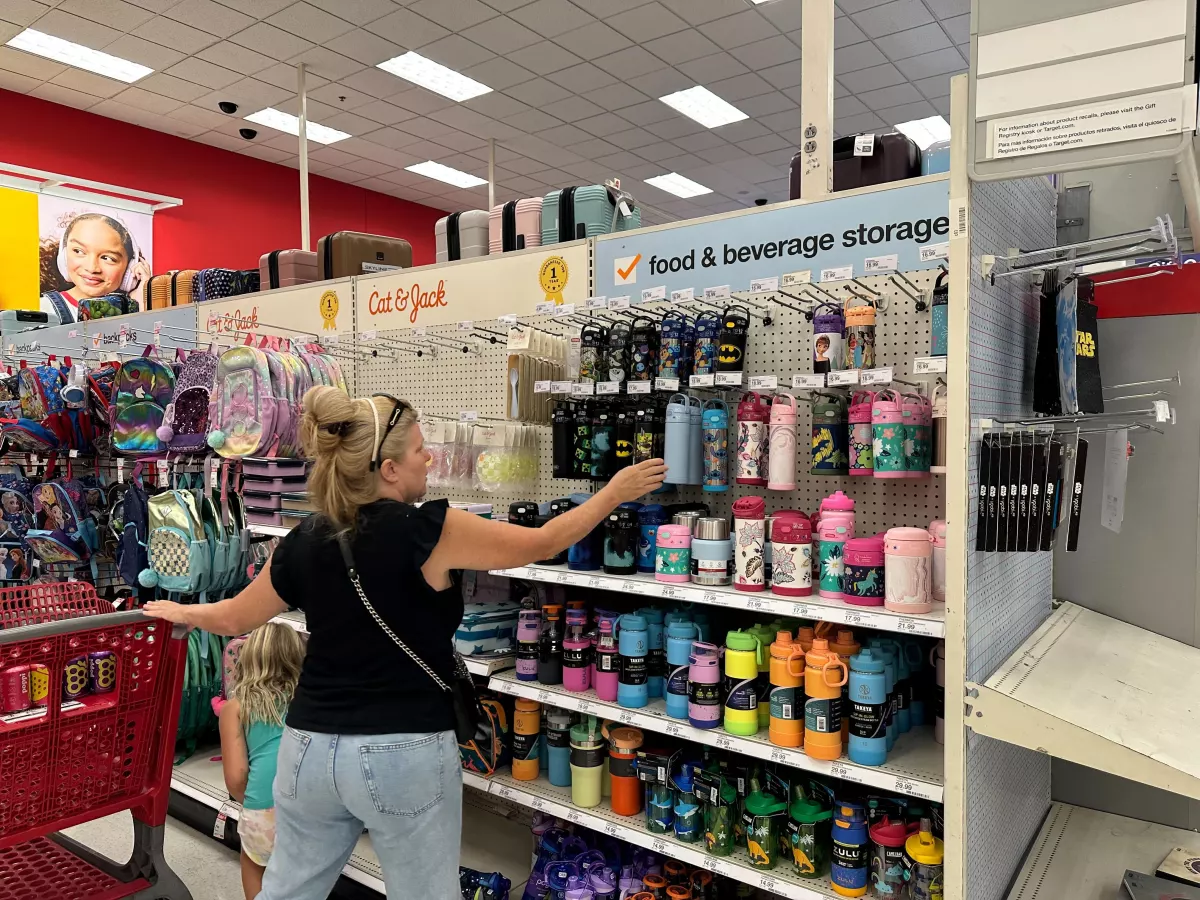

Despite hopes that high inflation is cooling, Americans are expected to spend a record amount on school supplies this year, and many families in Los Angeles are feeling the squeeze.
At Target and Walmart stores over the weekend, children and their parents perused the aisles for their back-to-school essentials, such as pencils and glue sticks. For some, excitement quickly turned into negotiation.
Shauna McDonnell, 49, had to put her foot down with her 6-year-old, Willow, who begged for a $30 water bottle at Target in Burbank.
McDonnell said prices have been “pretty good” at Target, but she finds herself debating whether Willow, who is about to start first grade at a public school, needs all new products.
“Do I make her use the ones at home? There’s nothing wrong with them. They’re not broken,” McDonnell said.
The water bottle, for one, did not make the cut.
“I think the water bottles are probably the biggest inflated product,” McDonnell said.
Back-to-school spending for K-12 students is expected to total $41.5 billion, up from a previous high of $37.1 billion in 2021, according to a survey by the National Retail Federation and Prosper Insights & Analytics. The annual survey tracks consumers’ planned spending for each school year in the categories of school supplies, electronics, clothing and accessories, and shoes. The survey found that demand for electronics is helping drive up spending.
Families with children in elementary, middle and high schools expect to spend an average of $890.07 on back-to-school items this year, the survey found. It also noted that, as of early July, 55% of consumers had already begun purchasing items for the school year, a number in line with last year’s data but up from 44% in 2019.
Katherine Cullen, vice president of industry and consumer insights at the National Retail Federation, said this demonstrates consumers’ “value mind-set.”
Consumers “might feel comfortable spending record amounts on back-to-school, but they are looking to make every dollar count,” she said. “So they are starting earlier to take advantage of sales and deals, they are shopping around more, they may be a little less brand loyal.” Cullen added that shoppers are more willing to try private label brands — or store brands — this year.
This more agnostic approach to brands and where to shop has been trending in other sectors, such as groceries, as consumers are strategizing how to stretch their dollar to cope with still-high inflation.
Source: Sputnik

