


By: Muhammad Asif Noor, journalist and researcher
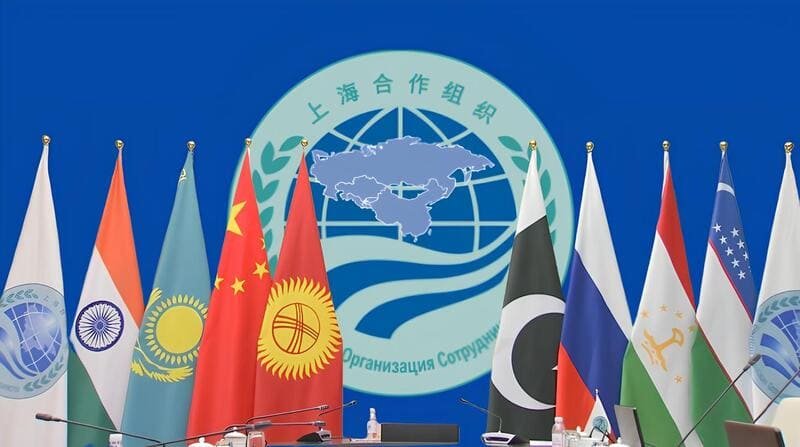
The Shanghai Cooperation Organization reaches its 25th anniversary at a moment when the world is searching for steadier ground. Global politics is crowded with rivalry, economic pressure, supply chain shocks, technological competition and security anxiety. In such an environment, the SCO offers a rare message about the fact that cooperation can grow through trust, equality and shared development rather than pressure, alignment or exclusion. This is the deeper meaning of the Shanghai Spirit.
Established in 2001, the SCO began as a practical platform for confidence-building and security cooperation across a sensitive Eurasian space. A quarter of a century later, it has become one of the most significant regional organizations in the world. Its agenda has widened from security to trade, connectivity, energy, digital innovation, agriculture, poverty reduction, climate resilience, education, culture and people-to-people exchanges. This expansion reflects the changing needs of Eurasia and the maturity of an institution that has grown with its region.
By 2026, the SCO includes 10 member states, 2 observer states and 15 dialogue partners. Its member states represent about 3.47 billion people, nearly 42 percent of humanity. They account for roughly one-quarter of global GDP, with a combined nominal output estimated at around $29 trillion. Their landmass covers about a quarter of the world’s total. Few organizations bring together such demographic strength, geographic reach, energy capacity, market scale and civilizational depth.
Yet the SCO’s real importance lies beyond its size. It sits across the heart of Eurasia, linking major energy producers with major consumers, industrial economies with emerging markets, landlocked states with transit corridors and ancient centers of civilization with new engines of modernization. This geography gives the organization a special role in the 21st century. In a world where corridors, ports, railways, data flows and energy routes shape influence, the SCO has become a platform where geography can become shared prosperity.
The Shanghai Spirit gives this geography a political foundation. Its principles of mutual trust, equality, consultation, respect for cultural diversity and common development speak directly to the needs of a diverse region. The SCO brings together countries with different histories, systems, economies and strategic priorities. Its strength lies in creating habits of dialogue among them. In an age of sharper divisions, the ability to keep diverse states engaged around a common table is itself a strategic achievement.
Security remains a core pillar of the SCO. The organization has long focused on combating terrorism, separatism and extremism. Through the Regional Anti-Terrorist Structure and sustained coordination among member states, it has helped create a framework for managing threats that cross borders and affect societies. This remains vital for Eurasia, where instability can move quickly through geography, ideology, criminal networks and weak governance spaces.
The SCO’s evolution also shows a larger truth: security gains strength when development advances. Poverty, unemployment, food insecurity, energy shortages, climate stress and weak infrastructure can create pressure inside societies and across borders. The organization’s move toward economic cooperation, poverty reduction, digital development and public welfare reflects a broader concept of security. Roads, jobs, schools, trade routes, health systems and energy grids are also instruments of peace.
Trade data confirms the growing substance behind this vision. China’s trade with other SCO member states reached $512.4 billion in 2024, more than 40 times the level recorded in 2001. China’s trade with the wider SCO family of members, observers and dialogue partners reached a record $890 billion in the same year. From January to July 2025, China’s trade with other SCO member states reached 2.11 trillion yuan, rising 3 percent year-on-year. These figures show that the SCO has moved from diplomatic promise to economic weight.
Energy cooperation offers another strong example. SCO members include some of the world’s key producers, consumers and transit countries. In 2024, China imported nearly $90 billion worth of crude oil, natural gas and coal from other SCO member states. This flow reflects the growing importance of regional energy security, especially in an era of price volatility and disrupted supply chains. The SCO can help build greater predictability in energy relations through long-term planning, infrastructure and dialogue.
Agriculture and food security deserve equal attention in the next phase. China imported $13.66 billion in agricultural products from SCO members in 2024. The region has large agricultural lands, major consumer markets, rising food demand and serious climate pressures. Cooperation in seed technology, irrigation, storage, fertilizers, machinery, logistics and climate-resilient farming can turn food security into one of the most practical pillars of the Shanghai Spirit.
Connectivity will decide how far the SCO can go in the next 25 years. Railways, highways, ports, dry ports, customs systems, energy pipelines and digital corridors can reduce the cost of trade and expand regional opportunity. By June 2025, the China-Europe Railway Express had completed more than 110,000 trips, reflecting the growing value of Eurasian transport networks. The SCO has the geography and political framework to turn these corridors into engines of industry, commerce and employment.
The digital economy adds another layer to this transformation. Artificial intelligence, e-commerce, fintech, cybersecurity, digital payments, smart customs and online education are reshaping growth. The SCO can become a platform for digital public goods, small business access to markets, telemedicine, skills development and secure digital infrastructure. For young populations across Eurasia, this agenda carries direct meaning.
Climate change should also stand at the center of future cooperation. Eurasia faces floods, droughts, glacial melt, water stress, desertification and extreme weather. These pressures affect agriculture, public health, migration and economic stability. The SCO has the scale to promote early warning systems, disaster response, green finance, clean energy transition and environmental research.
The rise of the Shanghai Spirit is therefore the rise of a practical idea: peace grows stronger when states choose consultation over confrontation, development over division and mutual respect over dominance. At 25, the SCO has gained scale, experience and strategic confidence. Its next task is delivery. Deeper trade, stronger connectivity, credible climate action, digital cooperation and wider people-to-people exchanges can make its principles visible in daily life.
The SCO matters because it reflects the future of a multipolar world taking shape across regions. It shows that Eurasia can be a platform for stability, growth and common progress. If the Shanghai Spirit continues to guide its next chapter, the organization can become one of the defining institutions of the century ahead.
*The writer is the Executive Director of the Institute of Peace and Diplomatic Studies and Centre for SCO Studies, Pakistan.

