


Steven Sahiounie, journalist and political commentator
The US–Israel relationship has been regarded as one of the most durable strategic partnerships in modern international politics. Successive American administrations have provided Israel with extensive military, political, intelligence, diplomatic, and economic support, often shielding it from international criticism and blocking resolutions perceived as hostile to Israeli interests in global institutions.
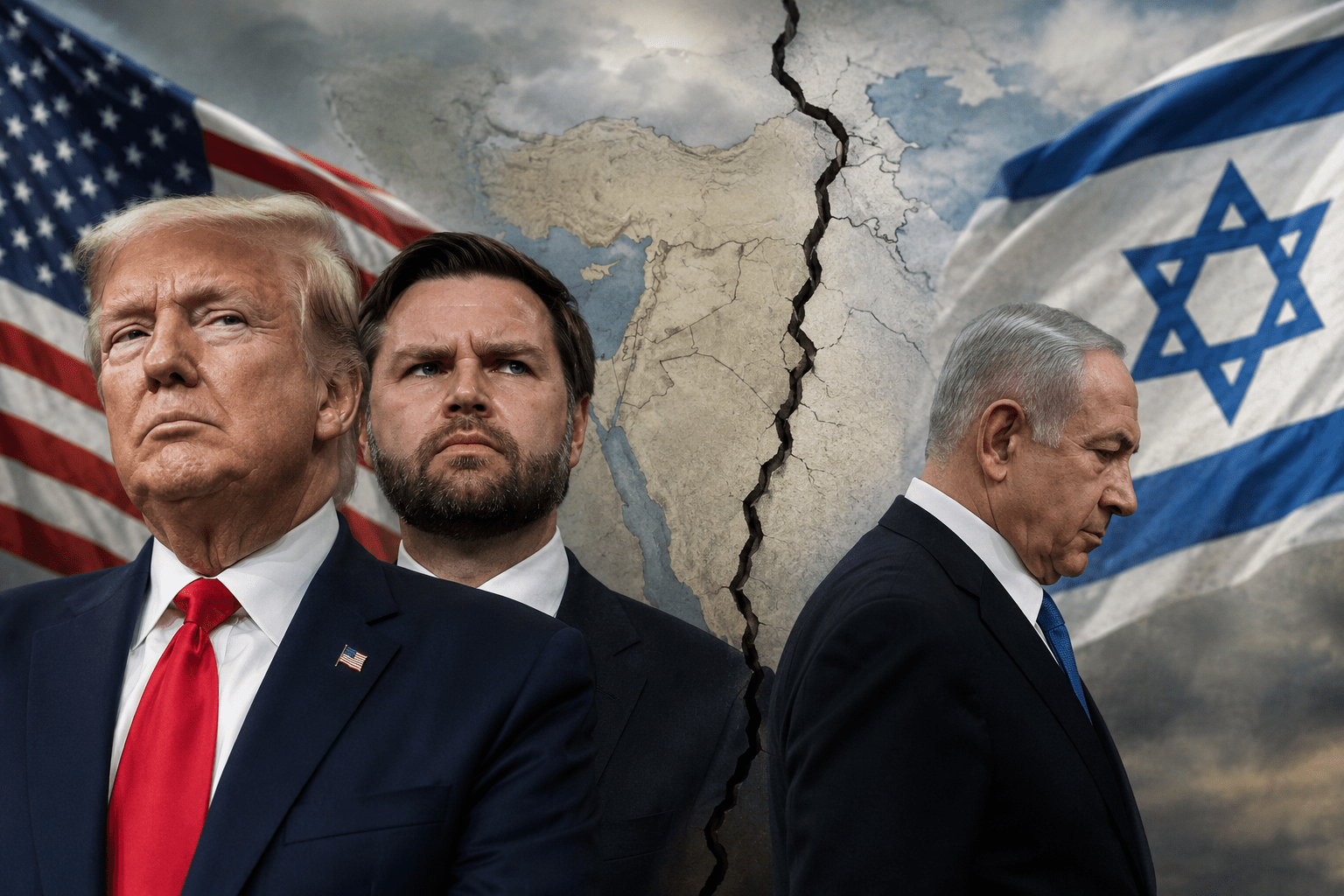
However, recent developments suggest that the traditionally unquestioned nature of this alliance may be entering a new phase. Growing tensions between US President Donald Trump and Israeli Prime Minister Benjamin Netanyahu, combined with Washington’s evolving approach toward Iran and regional diplomacy, have raised questions about the future of American support for Israel and the broader balance of power in the Middle East.
Israel’s Greatest Strategic Concern
US military aid, diplomatic protection, intelligence cooperation, and political backing have enabled Israel to maintain a significant strategic advantage in the region. The United States has repeatedly used its influence in international forums to defend Israel from sanctions and condemnations, while powerful pro-Israel lobbying organizations, most notably AIPAC, have played an influential role in shaping American policy toward Israel.
John J. Mearsheimer is an American political scientist and international relations scholar. He is a Professor of Political Science at the University of Chicago.
In 2006, Mearsheimer co-authored “The Israel Lobby and US Foreign Policy”, which exposes AIPAC, the Israel lobby, as central in establishing the U.S. foreign policy in the Middle East.
According to Haaretz, a major Israeli media, it was AIPAC which spent the most money in any US House Primary in US history, to defeat US Representative Thomas Massie in an election on May 19.
Afterwards, outraged Kentucky voters chanted extreme curses upon Israel and AIPAC. Americans, across party lines, are disgusted with the influence of AIPAC representing Israel, a foreign state, while manipulating American elections.
Former Israeli Prime Minister Ariel Sharon reportedly once remarked that Israel’s greatest fear was not the Arab world or Iran, but “waking up one morning and discovering that American support was no longer there.”
Today, that long-standing concern appears more relevant than ever.
Trump’s Warning to Netanyahu
During a reportedly tense phone conversation held at the height of escalating tensions between Israel and Iran, Trump urged Netanyahu not to retaliate militarily. According to reports, Trump warned the Israeli leader, “You should be very careful about what you do, because you may soon find yourself facing Iran alone.”
“If I was in the cabinet of the Israeli government, I might not be attacking the only powerful ally that I have anywhere left in the entire world,” US Vice President J.D. Vance said, while defending President Donald Trump’s newly signed memorandum with Iran.
Vance also criticized Israel for the attacks on Beirut in which the majority killed were innocent civilians, and risked the Trump diplomatic efforts to stop the war.
Unlike previous American presidents who often accommodated Israeli concerns even during periods of disagreement, Trump has shown a tendency to resist pressure and demand compliance from allies as well as adversaries.
As a result, the relationship between Trump and Netanyahu increasingly appears less like a traditional alliance between strategic partners and more like a power struggle between two leaders accustomed to dominating political narratives.
Lebanon: Another Source of Friction
Differences between Washington and Tel Aviv have become particularly visible regarding Lebanon.
The US views southern Lebanon primarily through a broader regional and diplomatic lens that includes opening up the Strait of Hormuz and ending the war with Iran.
Israel, by contrast, views southern Lebanon almost exclusively through the prism of national security.
While American officials have encouraged diplomatic engagement and discussions involving Lebanon and Israel, Israeli leaders continue to insist that military deployments will remain in place as long as Hezbollah is perceived as a threat to northern Israeli communities.
The Trump–Vance Doctrine: America First and the Middle East
The Trump–Vance approach combines nationalist populism with strategic realism. It rejects traditional assumptions that alliances should be maintained regardless of cost and instead evaluates relationships according to tangible American interests.
Vance has repeatedly argued that the United States spent decades and trillions of dollars on Middle Eastern conflicts while neglecting more pressing geopolitical challenges.
The Iran Factor and Israeli Anxiety
Any diplomatic understanding between Washington and Tehran implicitly acknowledges Iran as a major regional actor whose interests must be considered rather than eliminated.
If tensions with Iran decrease, Israel may lose one of its strongest arguments for receiving unconditional military support from the US and its allies.
The Rise of Conditional Support
One of the most significant implications of the Trump–Vance approach is the possibility that US assistance to Israel may become increasingly conditional.
Rather than providing military and financial aid automatically, future support could become tied to compliance with American policy objectives.
Public Criticism Reaches New Levels
Vance recently emphasized that a substantial portion of the defensive systems protecting Israel were manufactured in the United States and financed by American taxpayers.
He argued that President Trump remains Israel’s strongest supporter internationally but warned Israeli officials against treating Washington as the primary obstacle to their objectives.
The Financial Reality of the Alliance
The United States currently provides Israel with approximately $3.8 billion annually in military assistance.
Since World War II, Israel has received an estimated $158 billion in cumulative U.S. support when adjusted for inflation.
According to research cited by American policy institutes, Washington has provided at least $21.7 billion in military assistance connected to Israel’s operations following the October 7, 2023 attacks.
Analysts note that Israel’s ability to sustain prolonged military campaigns remains heavily dependent upon continued American support in the form of advanced weapons, munitions, intelligence cooperation, and logistical assistance.
A Historic Turning Point?
The current tensions do not necessarily signal the collapse of the US–Israel alliance. The strategic, military, economic, and cultural ties between the two countries remain extensive and deeply institutionalized.
However, the relationship appears to be entering a new phase.
The traditional model of unconditional American support is increasingly being challenged by a more transactional approach driven by the Trump administration’s “America First” doctrine. At the same time, growing skepticism toward foreign entanglements within segments of American society and political leadership is reshaping the domestic environment in which U.S. policy toward Israel is formulated.The most significant question is no longer whether the United States will continue supporting Israel, but under what conditions, at what cost, and to what extent that support will remain automatic.
For Israel, the prospect of an America that prioritizes its own strategic flexibility over traditional alliance commitments may represent the most consequential geopolitical challenge it has faced ever faced.
The emerging new relationship between the US and Israel might represent a lasting strategic realignment capable of shaping the future of the Middle East.
Steven Sahiounie is a two-time award-winning journalist.

