


Steven Sahiounie, journalist and political commentator
The Israeli government has once again delayed committing to a framework that could advance a broader ceasefire and political settlement in the Gaza Strip, underscoring a long-standing pattern of rejecting or revising agreements under domestic political pressure. While international mediators continue efforts to secure a durable end to the conflict, Israeli Prime Minister Benjamin Netanyahu has made clear that his government has not approved the latest U.S.-backed proposal, despite reported assurances that any Israeli withdrawal from Gaza would only begin after the complete disarmament of Hamas.
The latest developments come as Gaza continues to endure one of the gravest humanitarian catastrophes in its modern history. According to the Gaza Health Ministry, the war has resulted in more than 73,000 deaths and over 174,000 injuries since October 7, 2023. Palestinian officials report that women and children account for roughly half of those killed, while approximately 90 percent of Gaza’s urban infrastructure has been damaged or destroyed. Large portions of the territory remain without adequate medical care, clean water, electricity, or functioning sanitation systems.
Discovery of Mass Casualties in Gaza City
One of the most devastating reminders of the conflict emerged this week in Gaza City’s Sabra neighborhood, where the remains of 112 members of the Abu Sharia and Al-Hassaina families were recovered nearly two years after an Israeli airstrike destroyed an entire residential block on November 22, 2023.
The funeral procession, one of the largest held during the war, included the remains of 44 children under the age of sixteen, 37 women, and more than ten people with disabilities. Palestinian residents describe the attack as the “Sabra Neighborhood Massacre,” alleging that approximately 308 people were killed when multiple buildings collapsed under intense bombardment.
Netanyahu Rejects Immediate Commitment to U.S. Peace Proposal
Prime Minister Benjamin Netanyahu stated that Israel has not accepted the draft peace framework presented by the administration of U.S. President Donald Trump.
Speaking in a video message, Netanyahu explained that the proposal reflected Washington’s position rather than Israel’s own conditions.
“They sent us a draft proposal that we have not approved,” Netanyahu said. “It is not our proposal. We conveyed our observations to them.”
His remarks came after Hamas announced its willingness, in principle, to surrender its weapons during the second phase of the proposed peace initiative. The plan reportedly envisions the gradual disarmament of Hamas alongside a phased Israeli withdrawal from Gaza.
However, the Peace Council responsible for overseeing the initiative later assured Israeli officials that no Israeli withdrawal would begin until Hamas had completely dismantled its military capabilities, including light and heavy weapons, rocket stockpiles, and tunnel networks.
Following a meeting between Netanyahu and representatives of the Peace Council, both sides emphasized what they described as a shared understanding regarding the final objectives in Gaza.
Domestic Politics Shape Israeli Decision-Making
Political calculations appear to be heavily influencing Israel’s approach to negotiations.
Netanyahu faces parliamentary elections scheduled for October 27, with analysts suggesting that any significant military withdrawal before the vote could weaken his coalition and strengthen opposition criticism.
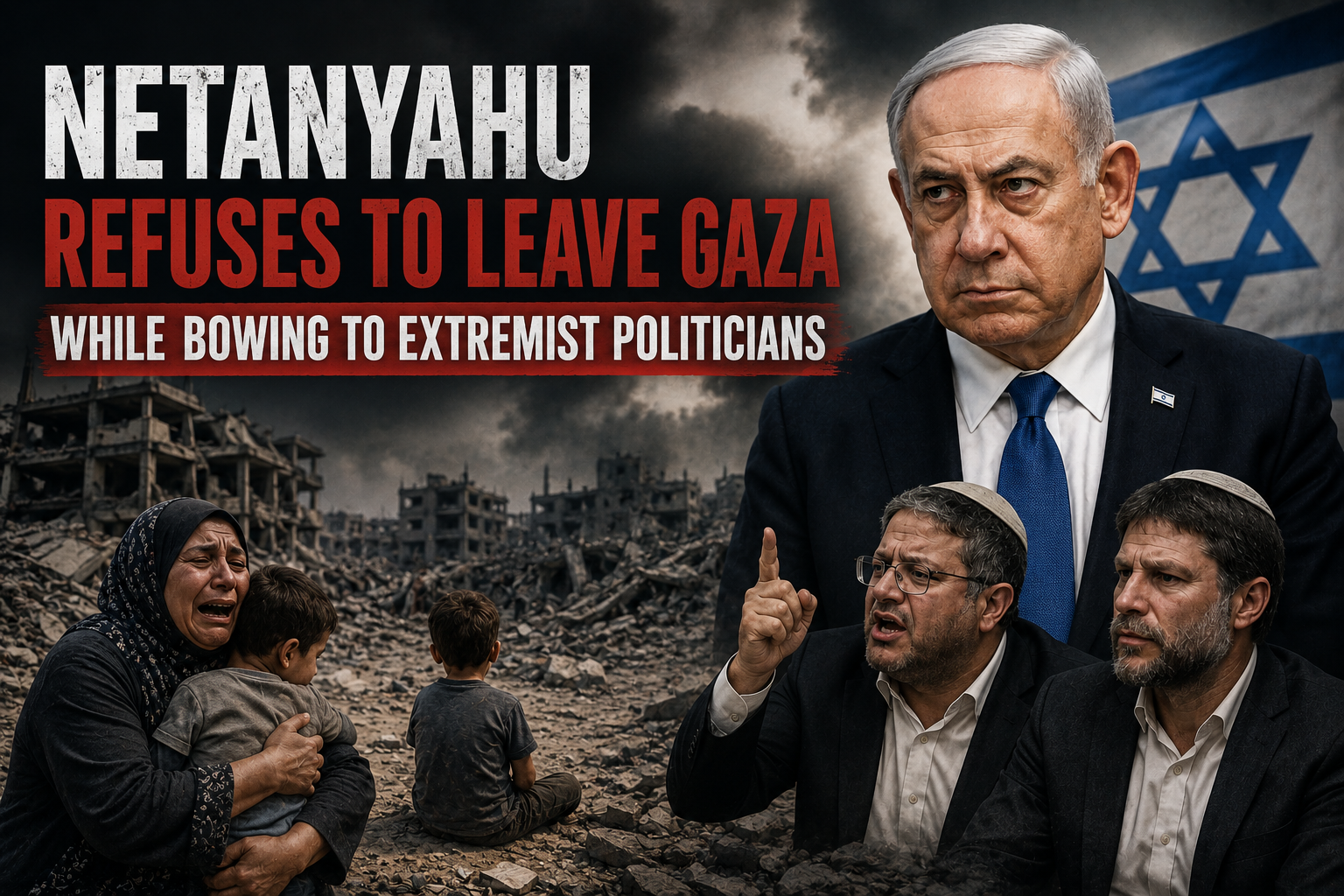
His governing coalition continues to rely on support from religious extremist ministers, including National Security Minister Itamar Ben-Gvir and Finance Minister Bezalel Smotrich, both of whom have openly opposed concessions to Hamas and have demanded continued military pressure.
The political stakes are particularly high for Netanyahu personally, as losing power could expose him to going to jail from his ongoing corruption trials.
Many observers believe these domestic considerations reduce the likelihood of major Israeli concessions before the elections.
Humanitarian Conditions Continue to Deteriorate
Meanwhile, humanitarian conditions across Gaza continue to worsen.
Municipal authorities warn that Israel’s restrictions on the entry of industrial oils, replacement parts, and maintenance equipment threaten the collapse of essential public services, including water systems, sanitation facilities, and electricity infrastructure.
Medical services remain under enormous strain.
Before the war, Gaza had more than 1,000 kidney dialysis patients. Current medical estimates suggest only around 700 continue receiving treatment, although no comprehensive official explanation has been provided regarding the decline. Health officials fear many patients may have died, been displaced, or lost access to life-saving care.
The Gaza Health Ministry reports that hundreds of bodies remain trapped beneath collapsed buildings, while emergency crews continue facing severe shortages of equipment necessary for recovery operations.
Peace Plan Faces Significant Obstacles
The latest U.S.-backed roadmap proposes a phased suspension of Israeli military operations alongside the gradual transfer of Hamas’ weapons to a newly established Palestinian administrative authority.
However, Hamas insists that Israeli military attacks must cease immediately before disarmament begins.
Israel, meanwhile, refuses to withdraw from positions it currently controls—including areas beyond the so-called “Yellow Line”—until all security conditions have been fulfilled.
The U.S. is unable to pressure Israel to comply with the peace plan for Gaza.
The Emerging Role of the Peace Council
President Donald Trump recently described the proposed agreement as a “historic” breakthrough, although there have not been any tangible results from the plan.
According to Trump, the Peace Council has secured commitments providing for the complete disarmament of Hamas and other armed factions while allowing Israeli forces to withdraw gradually as implementation progresses.
Originally proposed in September 2025, the Peace Council was designed to oversee the Gaza peace process before expanding its mandate to address broader international conflicts.
Critics, including some human rights advocates, argue that it risks bypassing established international institutions, particularly the United Nations, while raising broader questions about accountability and international legitimacy. Local residents say they have seen no benefit from the Peace Council and believe it to be worthless.
An Uncertain Path Forward
Despite renewed diplomatic activity, the prospects for implementing a comprehensive ceasefire remain uncertain.
Israel insists that complete disarmament of Hamas must precede any military withdrawal, while Hamas continues demanding an immediate cessation of Israeli military operations before surrendering its weapons.
With Israeli elections approaching, deep political divisions within Netanyahu’s coalition, and Gaza’s humanitarian crisis worsening by the day, negotiators face enormous obstacles.
For now, diplomacy continues, but events on the ground suggest that achieving a durable peace remains as elusive as ever.
Steven Sahiounie is a two-time award-winning journalist.

