


By: Mohammed Almosawi, Head of Baghdad Dialogue Forum, and Iraqi political writer
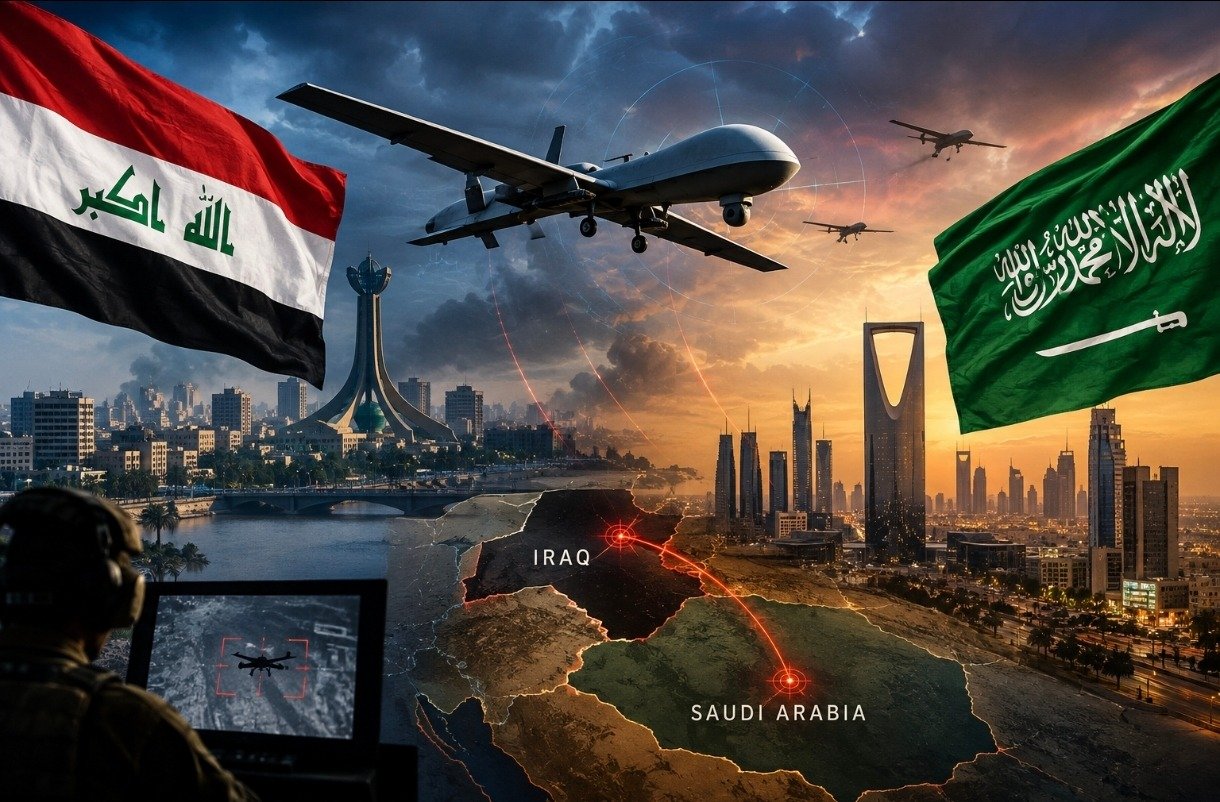
In an analytical reading of the current regional landscape, the recent official statement issued by the Saudi Ministry of Foreign Affairs regarding the targeting of the East-West pipeline in the Riyadh and Madinah regions by drones originating from Iraqi territory constitutes a striking turning point that invites reflection on its political and strategic implications.
When comparing the latest rhetoric with previous official statements by the Kingdom in similar incidents, a tangible shift reveals itself in the “formulation lexicon” of diplomacy. While earlier statements leveled explicit accusations against “Iran-affiliated militias” or “Tehran-aligned Iraqi groups,” the recent statement came across as more disciplined and abstract—Riyadh merely noted that the threat originated “from Iraqi territory,” without rushing to pin the blame on any specific local or regional actor.
This controlled reduction in the tone of the discourse does not merely reflect fleeting diplomatic caution. Rather, it points to a deep awareness on the part of the decision-maker in Riyadh that the file of regional targeting now transcends swift reactions and the individual initiatives of armed Iraqi factions, reaching a level of complex data and intricate scenarios that necessitate deliberation and prudent crisis management.
It appears that Riyadh has recognized the consequences of being drawn into rapid responses not built upon decisive investigative findings. In previous incidents, its haste in striking Iraqi security sites and points—which were later shown to have no link to the attacks—triggered widespread backlash. This impulsiveness threatened to undermine painstaking diplomatic efforts expended by the Kingdom over years to consolidate relations and deepen ties with Baghdad at both the political and popular levels.
Stemming from this lesson and political comprehension, the Saudi decision-maker imposed a more measured methodology in recent developments, choosing to maintain self-restraint and await the outcomes of official Iraqi investigations to reveal the truly involved parties and unpack the objectives and strategies seeking to utilize these attacks to mix the regional cards.
In light of the Iraqi armed groups’ denial of responsibility for the attack, and alongside Saudi caution in immediately directing accusations, doors are opened to analyzing hypotheses and intelligence dimensions that might explain the nature of this security breach.
The hypothesis of direct or indirect Israeli involvement in executing such complex operations cannot be dismissed. The Israeli military possesses units specialized in airborne landings, ground operations, and tactical maneuvers behind enemy lines—such as “Unit 5700” (whose name was previously linked to the Nukhayb desert operation) as well as the “Shaldag Unit.” These tactics point to the possibility of exploiting open geographical areas to launch swift operations that cause regional confusion.
Furthermore, the history of regional conflicts proves that no entity or armed organization is immune to security infiltration. What neighboring arenas have witnessed—such as “Hezbollah” in Lebanon, or the repeated infiltrations within Iran and Yemen where the dismantling of dozens of cells linked to Israeli intelligence was announced—confirms that the possibility of recruiting small groups or dispersed elements to execute proxy actions is highly plausible. Highlighted here is the gravity of the roles played by Israeli military intelligence units (such as Unit 504) and their activities directed inside Iraq, as well as their role in creating security vulnerabilities and exploiting them to advance escalatory agendas.
On the military and field level, estimated data suggests that launching more than five drones—of a type matching or imitating long-range drones (such as the “Shahed-107” or parallel technically replicated versions)—points toward the use of truck-mounted container launch platforms, rather than traditional fixed platforms that require lengthy setup and evacuation times.
This logistical pattern explains the urgent measures taken by Iraqi authorities in closing certain border crossings to inspect truck movements and determine whether the launch platforms had crossed the border recently or were prepared deep within Iraqi territory.
When considering the macro framework of the crisis, the compass of “strategic interest” points toward Tel Aviv. Israel possesses a declared desire to keep Iraq in a state of perpetual conflict with its Arab and regional surroundings, deepening Baghdad’s isolation by trapping it within the square of being a “security threat to neighboring countries.”
Building a solid political or military posture requires steering clear of knee-jerk responses grounded in preliminary estimates—a reality Riyadh has recognized, and which Baghdad and Tehran (which expressed official readiness to participate in investigations) are handling with cautious responsibility.
The explicit disavowal by Iraqi factions and the eagerness of official institutions in Iraq to pursue the attack’s security leads provide an opportunity for diplomatic and intelligence agencies to decipher the codes of this operation. A significant wager remains in the coming days on joint investigations to unmask the true entity seeking to reshuffle the deck and ignite crismes among the region’s nations.

