


Steven Sahiounie, journalist and political commentator
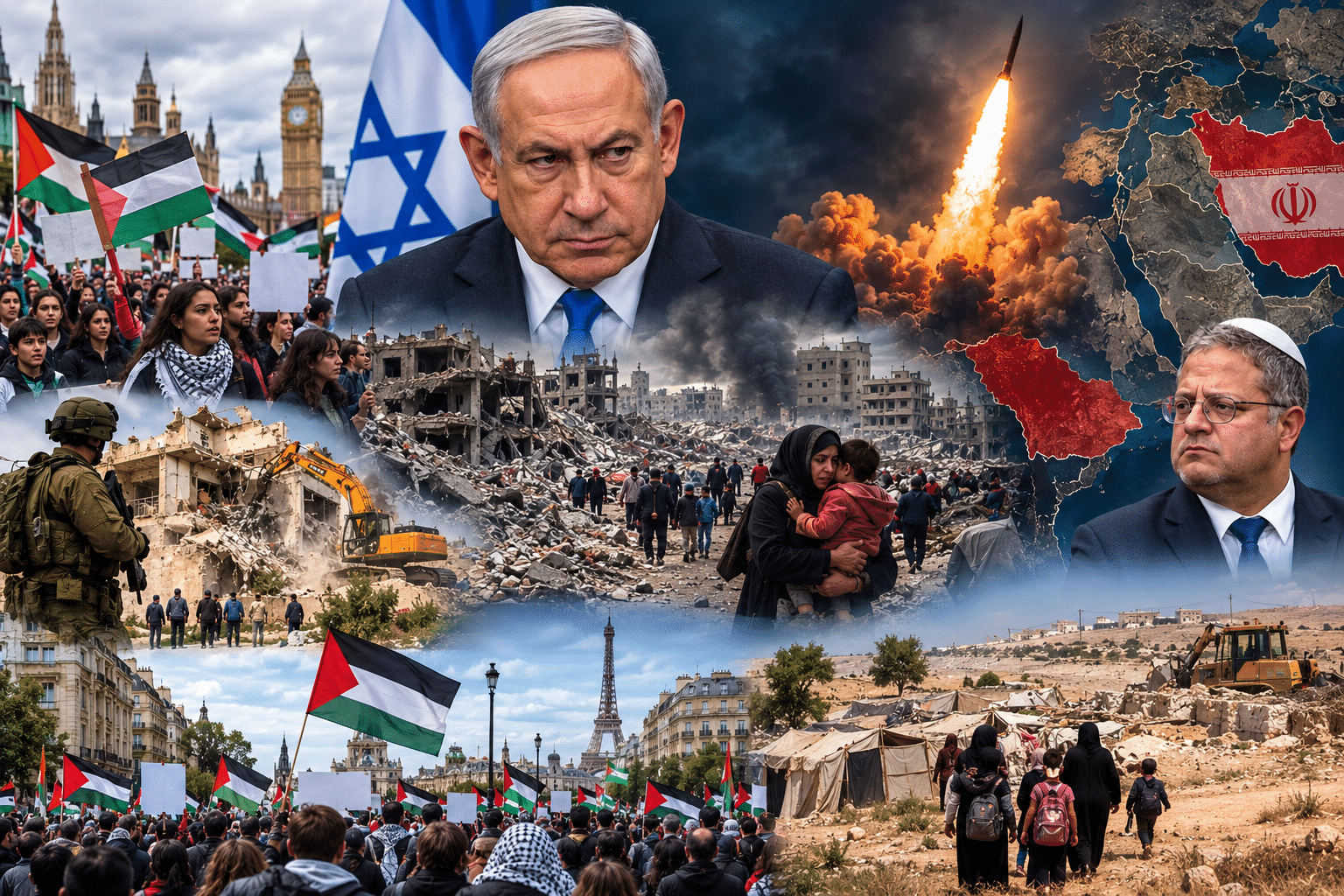
Israel is confronting mounting military, diplomatic, and domestic political pressures as its leaders intensify threats against Hamas, demonstrations against Israeli policies spread across European capitals, and the government considers striking Iran without direct American military participation.
According to Haaretz, Netanyahu is pushing through US mediators to secure Saudi Arabia’s permission for Israel to intervene in the conflict in Yemen. Israel seeks to help Saudi Arabia against the Houthis, and the relationship could evolve into a normalization agreement.
Israel’s leadership is pursuing an increasingly assertive security agenda while facing growing international criticism, unresolved questions over the future of Gaza, and a pivotal national election scheduled for October 27.
The latest escalation began with direct threats from Israeli Defense Minister Israel Katz against Khalil al-Hayya, head of Hamas’s political bureau, accompanied by sharp criticism of Turkish President Recep Tayyip Erdoğan and Ankara’s support for the Palestinian movement.
“We have killed Hamas leaders in Gaza, and al-Hayya’s turn will also come,” Katz said, adding that he would be sent to meet former Hamas political leader Ismail Haniyeh and his associates “in the depths of hell.”
Israel Defense Forces (IDF) continues to bomb Gaza even after Hamas has complied with the plan to de-arm. Unarmed families living in tents as winter approaches are bombed, killed and maimed on a daily basis in Gaza, while the hospitals have few medicines to treat the injured because Israel restricts supplies.
In the Occupied West Bank, demolitions, arrests and murders by Israeli settlers occur on a daily basis, despite US Ambassador Huckabee characterizing the Jewish terrorists as just a few. Now, the Bedouin community in the Negev is under threat. Whether you live in Gaza, the West Bank, or the Negev desert, if you are not Jewish you will be targeted for death, expulsion or permanent displacement under a racist plan to exterminate the original inhabitants of Palestine.
However, Israel’s campaign against Hamas is unfolding alongside another challenge: growing public opposition abroad to the war and to the international relationships that sustain Israel’s military operations. This opposition has become increasingly visible in major European cities, where demonstrators are demanding concrete policy changes rather than expressions of concern alone.
Thousands of demonstrators gathered in London on Saturday, demanding that the British government stop arming Israel, impose sanctions, and end what protesters described as British complicity in the war against Gaza.
Similar demonstrations took place in Paris, Berlin, Istanbul, and Copenhagen, highlighting continuing public pressure on governments to reconsider their political, commercial, and military relationships with Israel.
In London, protesters carried Palestinian flags and placards bearing slogans including “Stop Arming Israel,” “Stop Funding Genocide,” “End the Occupation,” and “End Complicity in Israeli War Crimes.”
In Berlin, more than 3,000 people reportedly participated in a demonstration organized by the United for Palestine coalition under the slogan “No Peace on Stolen Land.”
In Paris, demonstrators marched demanding an end to the war, unrestricted humanitarian assistance, accountability for Israeli leaders before international courts, an end to occupation and settlement expansion, and recognition of the Palestinian people’s right to self-determination.
Israeli authorities demolished approximately 80 homes in the unrecognized Palestinian village of al-Dahiyah in the Negev desert on Monday, displacing around 400 Palestinians, according to Israeli media reports.
The demolitions were carried out by personnel from the Israel Land Authority, accompanied by heavily reinforced police forces operating under the Ministry of National Security, headed by far-right minister Itamar Ben-Gvir.
Ben-Gvir has repeatedly publicized the destruction of Palestinian-owned homes in recent weeks. Last Tuesday, he participated in the demolition of a five-story building in the occupied East Jerusalem neighborhood of al-Tur, where approximately 70 Palestinians lived.
Dozens of Palestinian Bedouin villages in the Negev remain unrecognized by Israeli authorities. Their residents face restrictions on construction and, in many cases, inadequate access to water, electricity, roads, schools, healthcare facilities, and other essential services.
The controversy comes amid reports of a sharp increase in demolitions. In November 2025, the Hebrew-language outlet Ynet reported that demolition orders in the Negev had increased by as much as 400 percent since the beginning of that year, prompting criticism from Israeli human rights organizations that described the campaign as discriminatory toward Bedouin communities.
On June 24, 2026, Ben-Gvir boasted that 5,700 homes had been demolished during 2025.
Netanyahu is considering the possibility of striking Iran without direct American military participation, a potential shift in its security strategy as the October 27 Israeli elections approach.
Netanyahu’s personal and political calculations as a major factor behind the discussion. Netanyahu, who faces jail-time for fraud and corruption, may view an independent strike against Iran as an opportunity to strengthen his political position and improve his electoral prospects before voters go to the polls.
Nevertheless, the timing and feasibility of such an operation would remain closely connected to coordination with Washington.
An Israeli strike against Iran ahead of the elections could have consequences extending far beyond Israel’s domestic political arena. It could provoke Iranian retaliation, increase pressure on American forces and regional allies, and threaten an already volatile Middle East.
Taken together, the threats against Hamas leaders, demonstrations across Europe, demolitions in the Negev, and discussions about unilateral military action against Iran reveal the multiple challenges confronting Israel’s leadership.
These developments are interconnected by the pressures surrounding the war in Gaza, Israel’s regional security calculations, its international relationships, and the political incentives created by the approaching elections.
As public opposition grows abroad and disputes over Palestinian rights intensify at home, the government faces difficult choices over whether to maintain its current course or pursue diplomatic measures to reduce tensions.
The possibility of an independent strike against Iran adds another layer of uncertainty, potentially transforming domestic political calculations into a wider regional crisis.
Ultimately, the decisions made in the coming weeks could shape not only Netanyahu’s political future but also the prospects for regional stability, the future of Gaza, and the broader struggle over Palestinian rights and self-determination.
Steven Sahiounie is a two-time award-winning journalist.

