


Steven Sahiounie, Journalist and Political Commentator Specializing in Middle East and U.S. Affairs
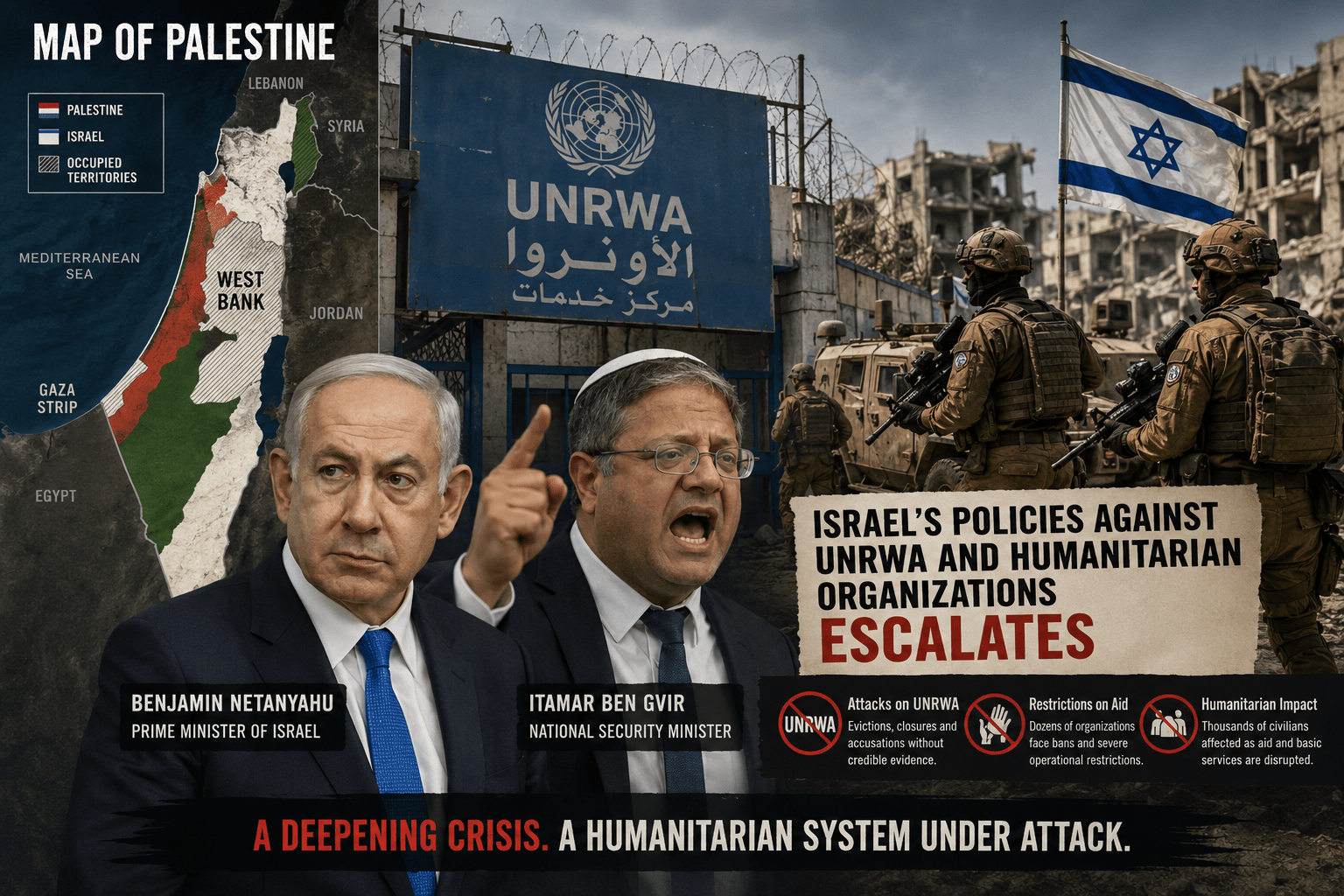
Israeli Prime Minister Benjamin Netanyahu and members of his far-right government, including National Security Minister Itamar Ben-Gvir and Finance Minister Bezalel Smotrich, have repeatedly expressed pride in their government’s policies and military campaign in Gaza, and the brutal crackdown in the Occupied West Bank. The war in Gaza has resulted in the deaths of 73,200 of Palestinians, and the injuries of 173,700.
On August 26, a letter signed by 45 U.S. Senators of the Democratic party urged Netanyahu to intercede to stop the deadly violence carried out by Israeli settlers on Palestinian territory in the West Bank.
For decades, Israel’s policies toward Palestinians, as well as its military actions in Lebanon and Syria, have generated intense international controversy. Israel has repeatedly benefited from political, military, economic and diplomatic support from the United States, including Washington’s use of its veto power at the United Nations Security Council to block resolutions perceived as threatening to Israel.
Israel Begins Evacuation of UNRWA Facility in Kafr Aqab
On August 25, Israeli National Security Minister Itamar Ben-Gvir announced that Israeli authorities had begun removing UNRWA from its facility in Kafr Aqab, north of Jerusalem, in the Occupied West Bank.
Ben-Gvir claimed that UNRWA employees had been involved in terrorism and insisted that there was “no place” for the United Nations agency in Jerusalem or Israel.
According to Israeli media reports, large numbers of Israeli police officers entered the facility and removed UNRWA personnel from the site.
Ben-Gvir also posted on Telegram that Israel was “making history,” announcing the beginning of what he described as the removal of UNRWA from Kafr Aqab. He published an image showing an Israeli flag raised inside the center alongside the words, “UNRWA is in our hands.”
The Kafr Aqab complex includes educational, vocational and health facilities. The center was established in 1952 and, according to UNRWA, provides vocational training to approximately 340 Palestinians from the West Bank every year.
The Palestinian presidency condemned the evacuation of the Qalandiya center and called for an urgent meeting of the United Nations Security Council to address what it described as Israeli attacks against United Nations institutions.
International Organizations Under Increasing Pressure
The latest action against UNRWA came only one day after representatives from more than 25 diplomatic missions and international organizations visited the Qalandiya center, highlighting the growing international concern over the future of humanitarian operations in East Jerusalem.
The Israeli government has also imposed new restrictions on dozens of international humanitarian organizations working in the Palestinian territories and Gaza.
According to the information provided by humanitarian organizations, 37 aid organizations face the possibility of having their activities prohibited in Gaza.
Among the organizations affected are Médecins Sans Frontières (Doctors Without Borders), the Norwegian Refugee Council, CARE, World Vision and Oxfam.
The requirements include providing complete lists of Palestinian employees for security screening and determining whether any employees have supported calls to boycott Israel.
International organizations have rejected or questioned these requirements, expressing concern that providing such information could expose Palestinian employees and their families to potential harassment, prosecution or death.
UNRWA Facilities Damaged in Gaza
Over a five-day period, 11 UNRWA facilities used as emergency shelters for approximately 11,000 displaced people in Gaza City were damaged.
The destruction of civilian infrastructure, combined with severe disruption to humanitarian operations and restrictions on access, has further weakened what humanitarian agencies describe as the remaining lifelines for civilians in Gaza.
United Nations and international humanitarian organizations have urged Israeli authorities to reconsider decisions affecting humanitarian organizations operating in the Palestinian territories and Gaza, warning that the measures could effectively bring their operations to an end.
Dispute Over Allegations Against UNRWA
Israel has accused UNRWA for years of providing institutional cover for Hamas. The allegations intensified following the October 7, 2023 attacks, when Israel accused a number of UNRWA employees of involvement.
An independent review led by former French Foreign Minister Catherine Colonna examined allegations concerning the agency’s neutrality and identified certain issues related to neutrality within UNRWA but also noted that Israel had not provided supporting evidence for some of its broader allegations.
Independent United Nations investigators, however, have themselves accused Israel of deliberately targeting Palestinian children and have described the situation in Gaza as part of an ongoing genocidal campaign.
Israel has previously prevented foreign politicians and parliamentary delegations from entering the country or the occupied Palestinian territories because of their political positions, particularly when they support the Boycott, Divestment and Sanctions movement, advocate international legal action against Israeli officials and military personnel, or accuse Israel of war crimes.
A Wider Battle Over International Humanitarian Access
As Gaza continues to face enormous destruction, displacement and humanitarian hardship, any further restriction on aid organizations could have consequences extending well beyond individual institutions.
For Palestinians, the latest developments are viewed as another step toward dismantling the international infrastructure that has provided refugees with education, health care and humanitarian assistance for decades.
The outcome of this confrontation could determine not only the future of UNRWA in Jerusalem and Gaza, but also whether international humanitarian organizations will be able to maintain an independent presence in the Palestinian territories during one of the most devastating periods in the region’s modern history.
Steven Sahiounie is a two-time award-winning journalist.

