


The United States has informed its ally, Israel, of its opposition to the recent Israeli airstrikes on Beirut amid rising casualties and concerns about a broader escalation involving Iran.U.S. Concerns About Recent AirstrikesOn Tuesday, U.S. State Department spokesman Matthew Miller stated that the United States expressed its concerns to Prime Minister Benjamin Netanyahu’s administration regarding the recent strikes. Notably, Miller’s tone was firmer than what Washington has previously communicated, signaling heightened apprehension about the situation.Increased Israeli Pressure on HezbollahIsrael has intensified its pressure on Hezbollah, conducting incursions into Lebanon following the killing of key leaders, including Secretary-General Hassan Nasrallah, last month. This marked the most significant blow to the group in decades.According to the Lebanese Ministry of Health, Israeli airstrikes have resulted in at least 2,350 deaths over the past year of conflict, along with approximately 11,000 injuries and the displacement of over 1.2 million individuals. The ministry reported that on Monday, 41 people were killed, and 124 others were injured.Humanitarian Crisis in Southern LebanonReema Jamous, Director of the Middle East and North Africa at the UN High Commissioner for Refugees, highlighted in a press conference in Geneva that repeated Israeli evacuation orders affecting dozens of villages in southern Lebanon now mean that over a quarter of the country is under evacuation orders.On Monday, Israel expanded its bombing campaign in Lebanon, with health officials reporting that at least 22 people were killed in an airstrike on a northern home where displaced individuals sought refuge from the Israeli attacks. Many of the casualties were women and children from a single family.Ongoing Violence and EscalationSince September 23, Israel has extended its campaign of violence in Gaza, which began on October 7, 2023, to encompass various regions in Lebanon, including the capital, Beirut. This expansion has seen unprecedented airstrikes in terms of both violence and frequency, along with a ground invasion in southern Lebanon, disregarding international warnings and United Nations resolutions.
Trending
- Israel at a Crossroads: Netanyahu’s Future and the Battle Over Gaza, Iran and the West Bank
- 2026 Russian State Duma Elections
- China, Iran and the Trump-Xi Equation: The Geopolitical Battle Behind the Middle East War
- Russia remains on Syria’s coast amid a new relationship with Damascus
- The Dimensions of the Absent Hypothesis: How Baghdad and Riyadh Manage the Complex Drone Crisis
- Saudi Arabia facing pressure at Bab al-Mandab: interview with Suat Delgen
- Israel’s war, America’s billions, and the strategic price of defeat in the Gulf
- Netanyahu denies October 7 warning while facing political doom
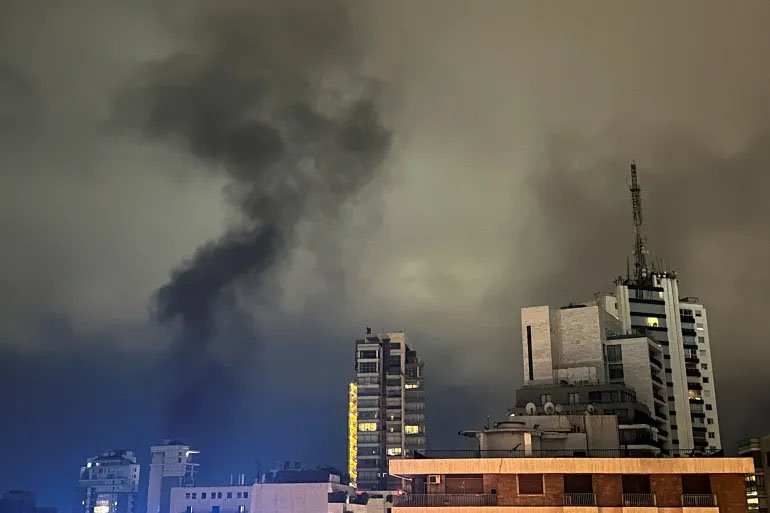
Israel expanded its bombing in Lebanon until Beirut's capital arrived (Reuters)
United States Opposes Israeli Airstrikes on Beirut

