


Steven Sahiounie, journalist and political commentator
The State of Israel refuses to honor the ceasefire with Lebanon, even though it is an American-brokered agreement which U.S. President Donald Trump has personally supported. The international community, along with the Arab world, have remained silent in the face of war crimes and atrocities carried out by the Israeli military in Lebanon continuously.
The more striking development is the existence of a Lebanese, Arab, and international political camp seeking to strip those defending Lebanon against the Israeli killing machine of their weapons while, at the same time, attempting to restrict the role of the Lebanese Army and place it in confrontation with the Lebanese people.
There is, in effect, an internationally backed political camp that appears determined to turn Lebanon into an arena of internal conflict simply to satisfy Israel. Yet, the United States itself has demonstrated throughout history that it can abandon its allies. The example of Afghanistan remains recent in the collective memory. The world witnessed American aircraft leaving Afghanistan with Afghans who had worked with and supported the United States desperately attempting to flee, with some falling to death from departing aircraft.
The situation in Lebanon is extremely deadly. While Israel continues to kill, steal, burn, and destroy people, trees, and homes, there are those who assist and support it and normalize relations with it.
Israeli Map Sparks New Controversy
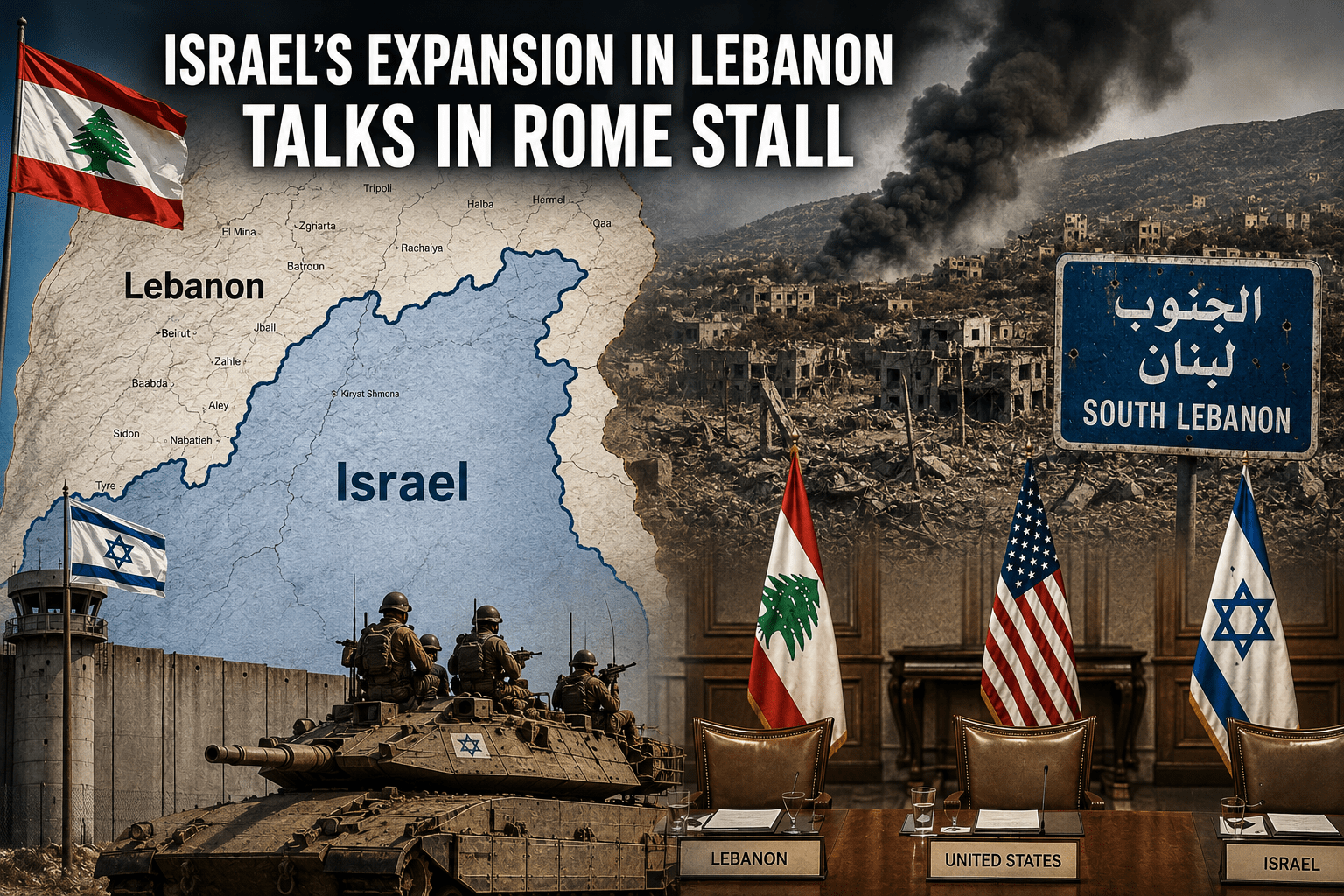
Hezbollah accused Israel of a land-grab in southern Lebanon after an account affiliated with the Israeli Foreign Ministry published a map showing parts of Lebanese territory within the borders of the Israeli state.
The map, published by the official “Israel in Arabic” account on X, triggered widespread controversy because parts of southern Lebanon appeared within the area depicted as Israel, in a manner that does not correspond to internationally recognized borders.
The Israeli Foreign Ministry later removed the map from its official English-language page while leaving it published on its “Israel in Arabic” account.
Hezbollah described the map as “undeniable confirmation” of what it called the “Israeli enemy’s ambitions in Lebanon, its land, resources, and assets,” arguing that Tel Aviv “has not and will not abandon them.”
Israeli Military Expansion in Southern Lebanon
The controversy surrounding the map came as the Hebrew-language newspaper Haaretz, based on field visits and satellite-image analysis, reported that the Israeli army had expanded its deployment in southern Lebanon.
According to the investigation, Israeli forces now control an area estimated at approximately 600 square kilometers of Lebanese territory. Extensive construction has reportedly taken place, including the establishment of a military base away from the border and the construction of dozens of kilometers of roads.
Haaretz also reported major changes across the area, saying that villages have been completely erased in some locations while Israel has strengthened its military presence.
During the current confrontation, the Israeli army has advanced more than 10 kilometers into Lebanese territory.
These developments have intensified fears among many Lebanese that Israel’s objectives may extend beyond temporary military operations and the stated goal of addressing Hezbollah’s weapons and security concerns along Israel’s northern border.
Rome Negotiations Produce No Breakthrough
The Israeli map was published only days after the seventh round of Lebanese-Israeli negotiations in Rome, held under American sponsorship.
The talks addressed the implementation of the “framework formula” agreement concluded on June 26. However, the seventh round failed to produce an agreement concerning the next area from which Israeli forces would withdraw, with a new round expected in early September.
Hezbollah, meanwhile, continues to reject demands that it surrenders its weapons. Israeli attacks on southern Lebanon have continued since March 2.
According to Lebanese authorities, the attacks have resulted in the deaths of 4,333 people, injuries to 12,250 others, and the displacement of more than one million people.
Lebanon Considers Suspending Negotiations
Lebanon is examining several options following the negative outcome of the seventh Rome round.
Israel continues to reject withdrawal from territories it occupies before verifying the disarmament of Hezbollah. Lebanon, meanwhile, insists that tangible measures must first be implemented on the ground if negotiations are to continue.
Reports have circulated that Lebanon may suspend negotiations because of doubts about the usefulness of the talks amid what Lebanese sources describe as Israeli intransigence and an intention to impose new equations and conditions.
Three Options Under Discussion
Several proposals are being discussed between Lebanon and the American side. These include suspending negotiations altogether, beginning serious Israeli steps before the preliminary date for the eighth round in September, or obtaining guarantees and commitments for implementation and linking them to the continuation of negotiations.
The primary Lebanese requirement is a complete halt to Israeli military operations.
Lebanese sources argue that it is unacceptable for Israel to continue military operations, bulldozing, and destruction in southern Lebanon as though negotiations were not taking place. They have also called for the identification of new “trial areas,” including Khiam, Bint Jbeil, or other towns.
Lebanon has conveyed clear messages to Washington that negotiations cannot continue in their current form without tangible Israeli measures. Beirut has stressed the need for Washington to pressure Israel to implement its commitments and for the steps taken by both sides to be reciprocal.
Lebanon also rejects Israel’s equation linking withdrawal to verification of Hezbollah’s disarmament. According to the Lebanese position, Israel must withdraw so that the Lebanese Army can deploy and carry out its responsibilities. A verification mechanism would then oversee the process once an agreement is reached on which party would represent it.
Diplomatic Developments and American Pressure
Israel’s Channel 13 reported that the United States was pressuring Israel to close the Gaza, Lebanon, and Iran fronts. The report also referred to a request from the commander of CENTCOM for an Israeli withdrawal from areas in southern Lebanon.
Lebanese negotiator former ambassador Simon Karam was briefed on the Rome meetings and given instructions for the next stage. Prime Minister Nawaf Salam reaffirmed support for residents of southern towns and efforts to secure their return.
The Iran-U.S. Dimension
Lebanese journalist Khalil Harb wrote on his official Telegram account, “The June 18 memorandum, which provides for a cessation of fighting, the lifting of the American naval blockade, the reopening of the Strait of Hormuz, and the launch of a 60-day negotiating process to conclude what was hoped would be a final agreement, has effectively collided with a wall of differing interpretations between Tehran and Washington.”
The developments surrounding Lebanon are therefore taking place within a broader regional environment involving Washington, Tehran, Israel, and several Middle Eastern fronts.
Lebanon can’t achieve security through negotiations while Israeli military operations continue, and continued pressure to disarm Hezbollah could deepen internal divisions and transform the country into a civil war.
For many Lebanese, the central question is no longer limited to Hezbollah’s weapons or the outcome of the Rome negotiations. It is whether Israel intends to withdraw from southern Lebanon at all, and whether the international community—particularly the United States, which sponsors the negotiations—will exert sufficient pressure on Israel to implement its commitments.
Steven Sahiounie is a two-time award-winning journalist.

