


Steven Sahiounie, journalist and political commentator
The renewed escalation between Ansar Allah (the Houthis) and the Kingdom of Saudi Arabia, following years of calm, has set the Middle East ablaze and plunged the region into an unprecedented and dangerous escalation, particularly as the war involving the US-Israel war on Iran continues.
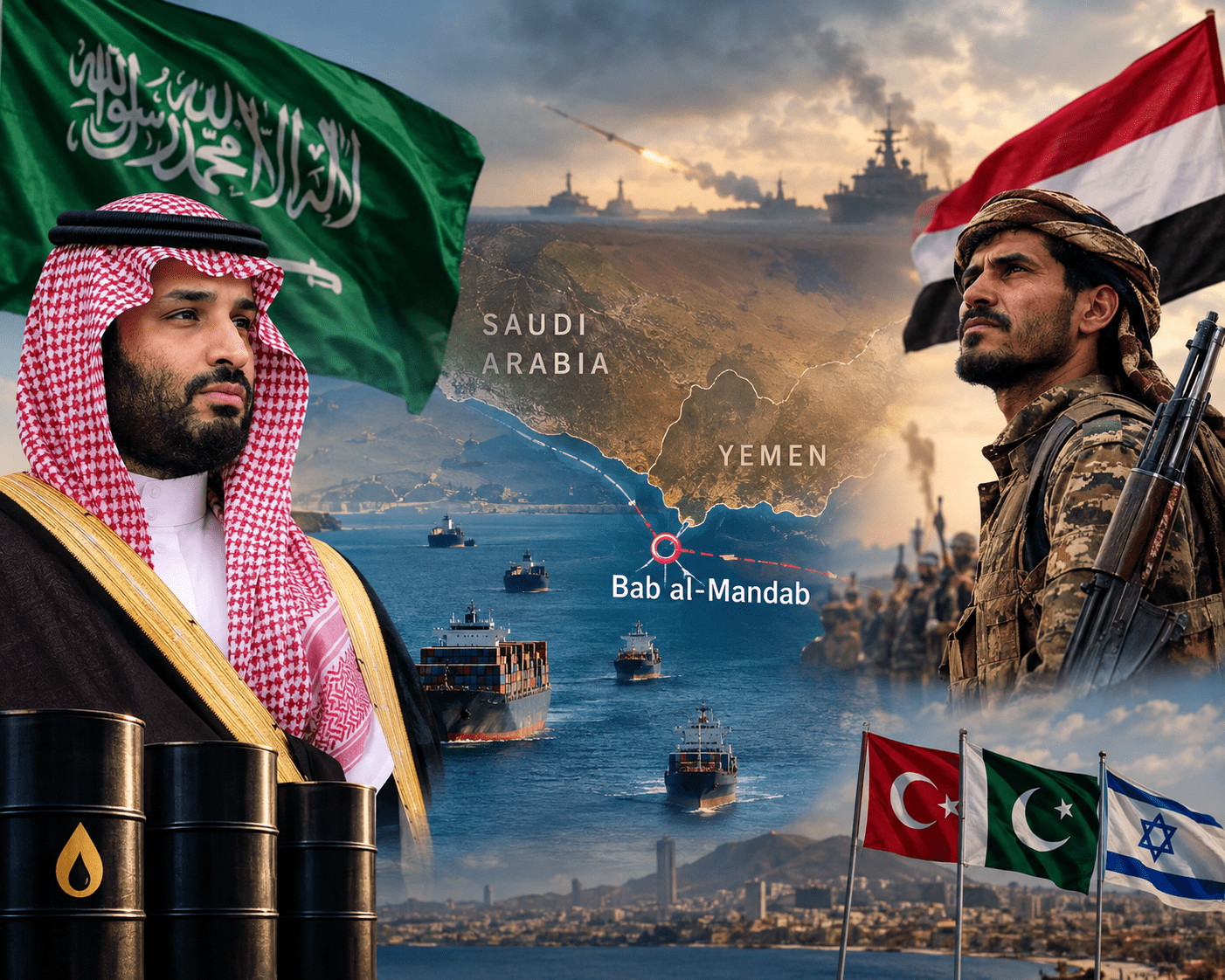
Amid the military silence of Riyadh’s allies and Yemen’s escalation through its control of the Bab al-Mandeb Strait, Saudi Arabia finds itself standing alone in this confrontation. Devastating strikes have had a significant impact not only on the Saudi economy but also on global energy prices
Journalist Steven Sahiounie interviewed Suat Delgen, a former Turkish naval officer, who focuses on the defense industry and foreign policy issues. He has extensive knowledge of naval warfare systems, NATO, EU security and defense policy, maritime security, new technologies, and Western Asia.
#1. Steven Sahiounie (SS): For many years, the Saudi–Ansar Allah front remained relatively calm. What, in your assessment, has triggered the renewed escalation at this particular moment? What are the main political, military, and regional factors behind the reopening of this front, and who could potentially benefit from the escalation?
Suat Delgen (SD): My assessment is that the Houthis see an opportunity to strengthen their position inside Yemen and force Saudi Arabia to negotiate on more favorable terms. The relative calm never resolved the underlying conflict. The legacy of the Saudi-led blockade, restrictions on access and unresolved political and economic disputes continued to shape the relationship.
The war involving Iran and the United States has changed the regional setting. Tehran has sought to spread the costs of the confrontation across the region, increasing pressure on Saudi Arabia and the other Gulf states. With Iranian support, the Houthis have been able to exploit that situation while pursuing their own territorial and political objectives.
I see their advance along Yemen’s Red Sea coast and towards strategically important islands as part of an effort to acquire greater influence over Bab al-Mandab. They want a bargaining instrument similar to the one Iran possesses at Hormuz. The ability to threaten Saudi shipping gives them a means of imposing costs on Riyadh and demanding concessions.
They do not need to exercise complete control over the strait to achieve this. If they can make passage sufficiently dangerous or expensive, they can influence commercial decisions and put pressure on the Saudi leadership.
The Houthis are the most immediate potential beneficiaries. They could emerge with more territory and a stronger negotiating position. Iran also benefits when its adversaries have to divide their attention and resources across several fronts. That does not mean every Houthi decision is dictated by Tehran; their interests overlap, but the Houthis have their own ambitions in Yemen.
There could also be an unintended consequence. If Riyadh concludes that its current security partnerships cannot provide adequate protection, it may become more willing to explore closer cooperation with Israel. That would complicate Iran’s calculation of what it has gained from this escalation.
#2. SS: Saudi Arabia recently signed the Mecca Agreement with Türkiye and Pakistan. However, despite the renewed escalation with Ansar Allah, Riyadh appears to be facing the situation largely on its own. How do you explain the apparent Turkish and Pakistani silence? What are Ankara and Islamabad seeking to achieve by remaining outside the conflict?
SD: I would be careful about describing Türkiye’s position as silence. The Turkish Defense Ministry has explicitly condemned the drone attack targeting Saudi Arabia and the actions carried out by the Houthis, calling for an end to activities threatening regional stability. Ankara has taken a political position. The question is how far it is prepared to translate that position into military assistance.
The Mecca Agreement establishes a collective defense commitment, but its practical application to this particular conflict remains unclear publicly. We do not have enough information about its operational arrangements to assume that it automatically commits Türkiye and Pakistan to joining military operations inside Yemen.
My assessment is that both governments want to support Saudi security while avoiding an open-ended confrontation with Iran and its regional partners. Ankara wants to preserve its diplomatic room for manoeuvre. Islamabad must also consider its shared border with Iran and its domestic security pressures. Both would want a clear objective before entering the fighting, as well as a realistic understanding of how their involvement would end.
A verified attack on the holy sites could change that calculation considerably. Pakistan’s reaction to the reported drone incident near Mecca and Türkiye’s condemnation of attacks on Saudi Arabia show that their restraint has political limits. These statements do not establish an automatic military trigger, but an attack on the holy sites would make continued restraint much harder to sustain.
Riyadh, meanwhile, will judge the agreement by the protection it actually provides. If Saudi leaders feel that the partnership does not meet their security needs, they may become more receptive to normalization with Israel and participation in the Abraham Accords framework. Israel’s reported willingness to offer assistance makes that possibility especially relevant.
The Palestinian question would still carry considerable political weight. Nevertheless, sustained insecurity could change how Saudi leaders weigh their options. Ankara and Islamabad therefore have to offer enough reassurance to maintain Riyadh’s confidence while managing the risks of becoming directly involved.
#3. SS: Saudi Arabia and its allies are reportedly sustaining significant losses in the fighting against Ansar Allah. Given the scale of the confrontation, do you expect the United States to become directly involved in supporting Riyadh? Or could Washington prefer to provide political, intelligence, logistical, or military assistance without entering the conflict directly?
SD: For now, I expect Washington to concentrate on intelligence, air defense, logistics and military supplies rather than commit itself to another sustained campaign. That approach allows the United States to support Saudi Arabia while controlling the extent of its own involvement.
The meeting between Crown Prince Mohammed bin Salman and CENTCOM commander Admiral Brad Cooper points in that direction. Reports of American intelligence and targeting assistance also suggest that Washington is already providing support, even while remaining reluctant to conduct direct strikes.
The approval of a potential F-35 sale is a particularly important development. The proposed package includes 48 aircraft and is valued at approximately $24.3 billion, subject to congressional review. It signals a substantial commitment to the longer-term defense relationship. It cannot, however, resolve the immediate military problem: approval, delivery and operational readiness are separate stages.
I also believe Washington will try to use Saudi Arabia’s need for stronger security guarantees to encourage normalization with Israel. In that context, the scale and timing of additional American commitments could become part of a wider negotiation.
My reading is that Washington may provide enough assistance to prevent a serious deterioration in Saudi security while holding back some of the commitments Riyadh wants most. That would give the United States additional influence over Saudi decisions concerning Israel.
The F-35 approval is consistent with closer strategic alignment and could indicate movement towards a broader understanding. It is not, by itself, proof that a normalization agreement has been reached.
Direct American intervention remains possible. An attack on US personnel, a much greater threat to critical Saudi infrastructure or an intolerable disruption to international shipping could change Washington’s calculation. Until then, I expect substantial but carefully limited support, with Saudi–Israeli normalization remaining an important American objective.
#4. SS: Ansar Allah has threatened to close the Bab al-Mandab Strait. Do you see a strategic connection between the Saudi–Yemeni front and the broader confrontation between Washington and Iran? If the Bab al-Mandab Strait were actually closed, what would be the potential consequences for global shipping, energy supplies, international trade, and the global economy? Finally, what do you believe is the most realistic path toward ending the conflict?
SD: Yes, I see a strong strategic connection. Pressure at Hormuz and Bab al-Mandab exposes Saudi Arabia to threats on both sides of the Arabian Peninsula. My assessment is that the Houthis want to use their position at Bab al-Mandab to extract concessions from Riyadh, much as Iran uses Hormuz as a bargaining instrument.
The economic consequences of a prolonged closure would be severe. To give a historical benchmark, approximately 8.7 million barrels of oil and petroleum products passed through Bab al-Mandab each day in 2023. That fell to around 4 million barrels a day during the first eight months of 2024 as shipping diverted. These are historical figures, not estimates of today’s traffic, but they show both the importance of the route and how quickly insecurity can alter trade flows.
The implications extend well beyond energy. The IMF estimated that the Suez Canal normally carried around 15 per cent of global maritime trade volume. During the earlier Red Sea disruption, diversions around Africa added ten days or more to delivery times on average. A prolonged interruption would increase freight and insurance costs, delay industrial supplies and raise costs for businesses and consumers. Countries dependent on imported food and fuel would be particularly exposed.
A simultaneous closure of Hormuz would make the situation considerably worse. In 2024, that strait carried approximately 20 million barrels of oil a day and around one-fifth of global LNG trade. Much of that supply has no readily available alternative export route. The figures for the two straits should not simply be added together, because some cargoes pass through both.
Saudi Arabia does retain an important outlet. Oil transported to Yanbu through the East–West pipeline can travel north towards Suez without passing through Bab al-Mandab. Closing the southern strait would therefore place Saudi exports under serious pressure without automatically blocking every Red Sea route.
If both chokepoints suffered prolonged disruption, I would expect European countries to become more directly involved, particularly in protecting commercial shipping. That would not necessarily mean joining the war inside Yemen, but the pressure for naval action would increase.
This helps explain why the Houthis say their restrictions apply to Saudi-linked vessels. My interpretation is that they want to maintain pressure on Riyadh while reducing the likelihood of renewed American intervention. They are trying to preserve the strait as a bargaining instrument without provoking a much larger coalition against them. Whether they can control the consequences so precisely is another question. Shipping companies and insurers may respond to the general danger regardless of the Houthis’ stated intentions.
The most realistic route towards ending the fighting is a negotiated sequence: an end to cross-border and maritime attacks, reciprocal limits on military operations, agreements on economic access and revenues, and a broader Yemeni political process. Oman and the UN could help facilitate those steps. A Saudi–Houthi understanding would be essential, but a durable settlement would also need to include other Yemeni actors.
I believe the direction of Saudi–Israeli relations will be a major factor in the crisis’s next phase. Closer security cooperation could strengthen Riyadh’s negotiating position, while also creating incentives for its opponents to escalate before such arrangements take effect.
The Houthis have already strengthened their bargaining position through their territorial gains. Their next objective, in my view, will be to obtain Saudi concessions that turn those military gains into a lasting political advantage. Whether they succeed will depend on their ability to negotiate before further escalation puts those gains at risk.
Steven Sahiounie is a two-time award-winning journalist.

