


By: Steven Sahiounie,journalist and political commentator
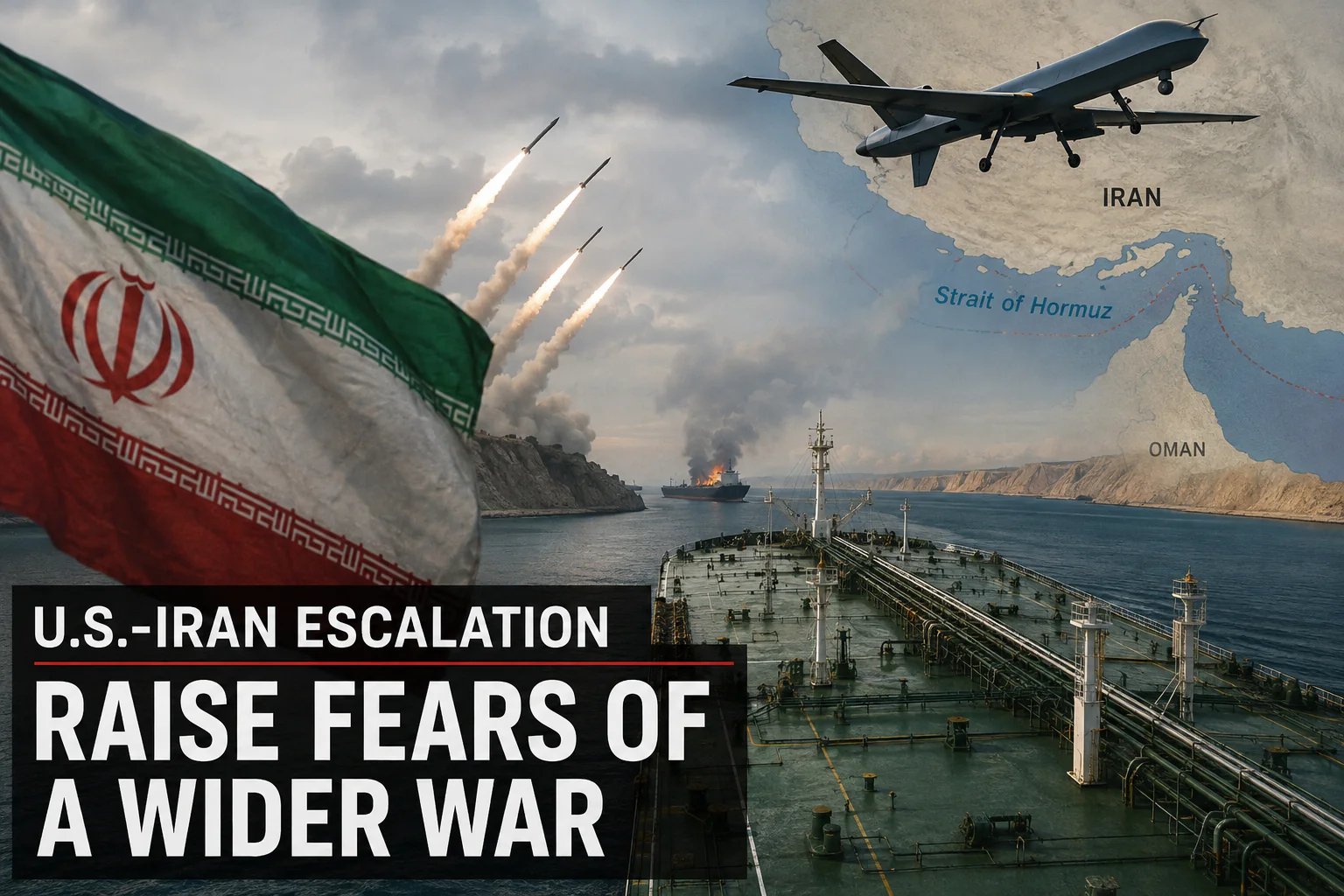
The confrontation between the United States and Iran is entering a dangerous new phase, with reciprocal strikes, attacks involving missiles and drones, civilian casualties in southern Iran, and growing tensions around the Strait of Hormuz raising concerns that the conflict could expand beyond the immediate U.S.-Iran theater.
The Iranian Red Crescent released images showing the extent of the destruction at a building where a wedding celebration was reportedly taking place. The footage also documented wounded people, including children, receiving treatment in hospital.
U.S. aircraft had bombed a house in the village of Kohestak, in the Sirik district of southern Iran, where a wedding celebration was being held. According to Press TV, the attack killed five people, including a child, and wounded approximately 63 others.
The escalation has not been confined to Iran. Tehran has carried out missile and drone attacks against U.S. bases and interests in Jordan, Iraq and Bahrain. Kuwait has also announced that it was targeted in Iranian attacks.
At the same time, the security situation around the Strait of Hormuz has become increasingly tense.
The Iranian Revolutionary Guard said that two tankers had attempted, “at the instigation of the U.S. military,” to travel outside the maritime route designated by Iranian forces in the strait before striking mines and suffering explosions on board, causing fires.
Iran then announced what it described as a “decisive operation” targeting “U.S. bases and interests in the region,” according to the Tasnim News Agency.
Iranian President Masoud Pezeshkian said Tuesday, during the Shanghai Cooperation Organization summit in Bishkek, that Iran would respond immediately if the United States returned to its commitments under the temporary agreement signed on June 17.
Iranian Foreign Minister Abbas Araghchi had said Monday that a U.S. return to its obligations under the memorandum of understanding “would allow matters to return to the right track and bring the current situation to an end.”
“We will hit them hard. There will be a response,” Trump told Fox News.
Trump described Iran as a “failed state,” claiming that most Iranian leaders had been killed and that Iran’s naval and air forces and surveillance equipment had been largely destroyed.
Despite the strong words from Trump, Iran continues to use deadly military force effectively against the U.S. and its allies.
Journalist Steven Sahiounie conducted an exclusive interview with Algerian journalist, and security and strategic affairs researcher, Mustafa Kamal Damani.
1. Steven Sahiounie (SS): From your point of view, who holds the key to stopping the escalation today: Washington or Tehran? And what immediate step should either side take to prevent the current confrontation from turning into a full-scale war that would be difficult to contain?
Mustafa Kamal Damani (MKD): The prevailing feature of the current conflict appears to be a state of neither peace nor war, even as the intensity of the military confrontation escalates.
The position of the United States appears uncomfortable amid the erosion of its military capabilities as a result of attrition, disagreements within the Atlantic Alliance, tensions in its relationship with its European Union allies, and the upcoming elections. There is also the escalation of the Israeli-Turkish and Israeli confrontations in Syria at the regional level, as well as the security transformations in the region that have resulted in the Mecca Alliance. These are pressure factors on Washington and limit its ability to continue along this path.
In addition, the consequences at the energy level are also placing pressure on the U.S. administration.
On the Iranian side, Tehran has a historical record of adapting to sanctions and circumventing them. The latest U.S. sanctions also target those dealing with Tehran, which means confrontation with Beijing, further complicating the impact of the sanctions and increasing the cost for the U.S. administration, which seeks to create a state of internal division within the system and mobilize the street.
However, according to current indicators, Tehran does not appear to have the option of retreating, at least in the medium term.
2. SS: If strikes and military responses continue, what is the most dangerous scenario that Tehran fears? Could the confrontation spread to the Gulf states, Iraq, Syria, Lebanon and the Red Sea, or are all parties still keen to keep the conflict within certain limits?
MKD: Cost is the determining and decisive factor in ending the conflict, given the lack of trust between the two sides.
The cost to Washington appears greater than that to Tehran, amid the risk of Washington becoming bogged down again in the Iranian quagmire, similar to Iraq and Afghanistan. This would mean Beijing continuing to advance at Washington’s expense, while Moscow regains the initiative in its war in Ukraine.
Washington remains the side that holds the decision to stop the war and return to negotiations, particularly given Tehran’s willingness to respond and the erosion of a significant part of its military capabilities.
The most dangerous scenario feared by Tehran, which constitutes a challenge, is a split among the decision-making circles. This could facilitate Washington’s penetration and have repercussions for Iran’s future control over the Strait of Hormuz, which Tehran is currently using to squeeze the global economy, increase the cost for Washington and push it toward retreat.
If the Iranian regime senses a genuine threat, expanding the scope of the war and setting the region on fire remains possible and cannot be ruled out.
However, to date, regional parties appear to be pushing for de-escalation, even as the confrontation intensifies, given the uncertainty surrounding the situation and its consequences for the countries of the region.
3. SS: In your view, rather than pushing Iran to make concessions, could U.S. strikes push Tehran to harden its position, accelerate its nuclear program, and strengthen its military and strategic relations with Russia and China?
MKD: The lack of trust in the U.S. administration and the absence of guarantees are what are pushing the Revolutionary Guard, whose role in managing the situation is growing, to push Tehran toward a harder position and toward the East.
Regarding relations with Beijing and Moscow, Tehran is providing a geopolitical service to Beijing and Moscow by exhausting and weakening Washington and diverting it away from Taiwan and Ukraine.
This gives them a role behind the scenes. What is happening is creating mutual pressure to improve the terms of negotiations and ease the current situation.
Journalist Steven Sahiounie interviewed Martin Love, American journalist and writer specialized on Iran and U.S. affairs.
1. SS: Is the Strait of Hormuz now the central battlefield in the U.S.-Iran confrontation?
Could continuing fighting around the Strait lead to a prolonged disruption of global oil and commercial shipping, and does Iran have an incentive to keep the Strait under pressure as a negotiating tool?
Martin Love (ML): Iran has the incentive to manage Hormuz along with Oman, because both countries achieve leverage and possibly eventual revenue. It’s not a plan that ought to invoke ire, aside from the fact that the U.S. is simply jealous of Iran and covets Iranian resources. Do ships pass Suez without a toll? The Panama Canal? No. The battlefield extends beyond Hormuz. In my view the U.S. simply wants to destroy Iran with any means available, and it’s a shame because the Trump administration is fully captured by the Zionists who have wanted war on Iran for decades and Trump caved to their demands because they thought the war would be over in a week or two and Iran would collapse. It is the biggest mistake the US has made, some say, since World War 2. Trump meanwhile has all but destroyed his Presidency and is now trying to wreck the Midterm elections in November which could easily hand the US House and Senate to Democrats.
2. SS: After the latest U.S. strikes and Iran’s retaliatory missile and drone attacks, do you believe the previous ceasefire framework has effectively collapsed, or is this escalation still being used by both sides to gain leverage before returning to negotiations?
ML: The worst part of this insane war may be that we are looking at the inception of World War 3. As for the ceasefire agreement, presumably the past MOU, that was blown up by the U.S. After the Minab massacre of school kids in Iran last winter you can bet that Iran is not likely to back down. It’s heroic. And existential for Iran. But at the same time Trump seems desperate to call “victory” and stop the war unilaterally but perhaps not desperate enough yet. Many in the US are concluding that Trump is mentally impaired and stupid. His polling numbers have been in steep decline. As for “Israel” some 300,000 have left the country for good and it’s quite possible Zionism will die and Netanyahu could go to prison for corruption eventually. I have maintained there are four factors that must be expunged from Washington: Hubris, Greed, Arrogance and Stupidity or else the US is at risk atop $40 trillion plus in debts.
Steven Sahiounie is a two-time award-winning journalist.

