


By: Steven Sahiounie, journalist and political commentator
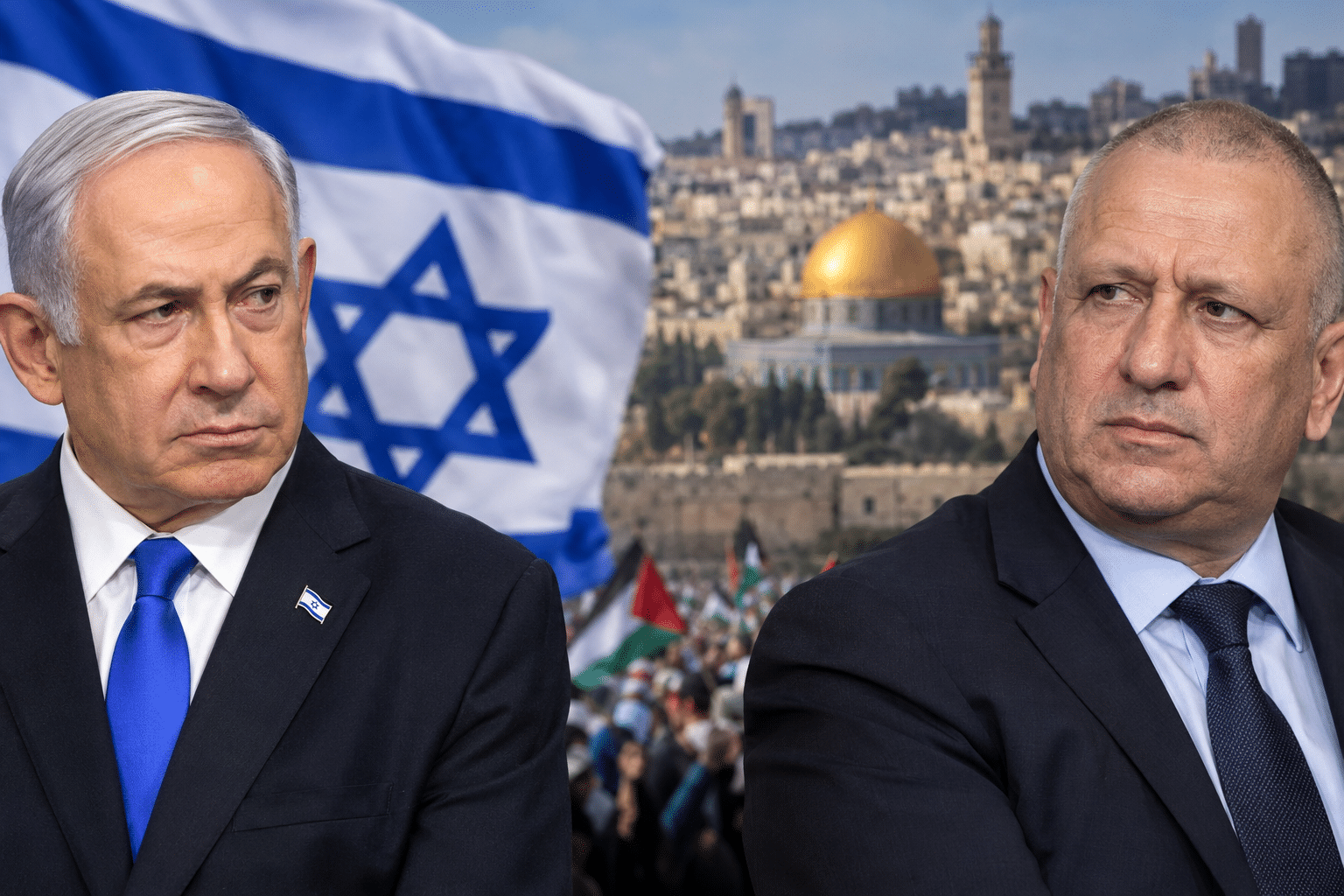
There is no clear winner in the Israeli election as of October 29. The Netanyahu bloc received 53 seats, the Opposition Eisenkot bloc received 48 seats, and the Arab bloc received 19. If Eisenkot allies with the Arab bloc, Netanyahu’s extremist gol be out.
But, if Benjamin Netanyahu is able to remain in power, there will be significant implications for the future of the Middle East, shaping regional security, relations between Israel and its Arab neighbors, and the ongoing Israeli-Palestinian conflict. His continued leadership may influence tensions with Iran, the prospects for peace, and efforts to establish a Palestinian state.
As the region continues to face political uncertainty and conflict, Netanyahu’s return to power raises important questions about whether the Middle East will move toward greater stability or experience further tensions and confrontation.
Journalist Steven Sahiounie interviewed Nizar Sadawi, a Palestinian journalist and Middle East correspondent for TRT World. Mr. Sadawi is giving his own personal analysis, and not representing the views of TRT World.
1. Steven Sahiounie (SS): How could the election results influence Israel’s policy towards Iran? Could they change the course of military confrontation?
Nizar Sadawi (NS): I believe the election results may change how Israel manages its confrontation with Iran, but not necessarily its strategic objectives. There is a broad consensus across Israel’s political and security establishment that Iran represents a major strategic threat.
The main difference lies in approach. Netanyahu has relied heavily on military pressure and confrontation, while Eisenkot, as a former military chief, may place greater emphasis on strategic calculations, coordination with Washington, and the political costs of military operations.
However, an Eisenkot-led government would not necessarily mean an end to military confrontation. Ultimately, US policy, regional dynamics, and the calculations of both Israel and Iran may prove more decisive than the identity of Israel’s next prime minister.
2. SS: What impact could the election results have on settlements in the occupied West Bank and East Jerusalem, and on Palestinian statehood?
NS: A Netanyahu-led government, particularly one dependent on far-right parties, would likely continue expanding settlements and pursuing policies that further undermine the possibility of an independent Palestinian state.
An Eisenkot-led government could adopt a more restrained approach towards settlement expansion and settler violence, particularly under international pressure. However, this should not be confused with a fundamental shift towards ending the occupation or recognising Palestinian statehood.
The fundamental problem is that much of Israel’s political debate concerns how to manage the occupation rather than how to end it.
In my view, changing the Israeli government alone will not revive the two-state solution. That requires concrete steps to end the occupation, halt settlement expansion, and recognize Palestinians’ right to self-determination and an independent, sovereign state.
3. SS: Could Netanyahu and Eisenkot form a national unity government despite their political rivalry?
NS: The election has created a complicated parliamentary situation, with neither camp securing a clear majority. Ironically, the Arab parties could hold the balance of power with their historic parliamentary representation, yet most major parties in both camps remain unwilling to rely on them to form a government.
I see two main scenarios. The first involves defections or political realignments within the opposition that could give Netanyahu the additional seats needed to reach a majority of 61.
The second is a national unity government, despite the deep mistrust between Netanyahu and Eisenkot.
Of course, these scenarios face significant political obstacles, particularly given Eisenkot’s previous resignation from Netanyahu’s war cabinet and their disagreements over the conduct of the war.
Ultimately, political necessity could push the two rivals towards an agreement, but even a unity government would not necessarily signal a fundamental change in Israel’s policies towards the Palestinians.
4. SS: How could the election results shape the wider Middle East conflict, and what are the prospects for a political solution guaranteeing Palestinian rights?
NS: Israel’s election will undoubtedly influence regional dynamics, particularly given the growing interconnectedness of the Iranian, Lebanese, and Palestinian fronts. However, I believe it would be a serious mistake to treat the Palestinian question merely as an extension of the confrontation with Iran.
The Palestinian struggle predates these regional rivalries by decades. Its roots lie in occupation, displacement, and the denial of Palestinian national rights.
A change in Israeli leadership could create opportunities for diplomacy and de-escalation, but it would not automatically produce a meaningful peace process.
The experience of recent years has demonstrated that managing the conflict through military superiority and temporary security arrangements does not address its underlying causes.
In my view, lasting regional stability requires a political settlement based on ending the occupation, stopping settlement expansion, and guaranteeing Palestinians’ right to self-determination and an independent, viable state.
Without addressing these fundamental issues, any change in Israeli leadership risks becoming a change in tactics rather than a genuine turning point towards peace.
5. SS: What is the real disagreement between Netanyahu and Eisenkot over the wars in Gaza and Lebanon? Is it about their military objectives, or rather the timing of operations and their political costs?
NS: The disagreement is mainly about strategy, timing, and the political cost of military operations, rather than the objectives themselves. Both Netanyahu and Eisenkot share broadly similar security priorities, but differ on how to achieve them.
In Gaza, Eisenkot has criticized Netanyahu for prolonging military operations without a clear political strategy.
Steven Sahiounie is a two-time award-winning journalist.

